Chargebacks911 Alternatives: 4 Options Compared


The best Chargebacks911 alternatives split into two categories. Prevention tools stop a dispute before it becomes a chargeback. Remediation tools fight chargebacks after they're filed, and that's what Chargebacks911 does.
I've run stores of my own and advised merchants on cutting their chargeback rate, and the first thing I check is what the customer saw on their statement. On my own stores, fixing the descriptor did more than any dispute I ever won.
Know which category you need, and you can pick a vendor in one read instead of four sales calls.
Key takeaways
- Chargebacks911 fights chargebacks after filing, so prevention tools solve a different problem.
- Pick prevention when your dispute volume is preventable, remediation when chargebacks already exist.
- Chargebacks911 settled an FTC and Florida enforcement action in November 2023.
- The settlement bars it from merchants combining affiliate sales and recurring supplement billing.
- Outside estimates put its enterprise contracts at $1,000 to $3,000 monthly.
- A bad billing descriptor makes you pay again on every repeat dispute.
Ready to stop disputes before they file? Start with alert-based prevention and see what your last month of disputes would have cost.
What are the best Chargebacks911 alternatives?
The best Chargebacks911 alternatives are either prevention tools, which stop a dispute before it becomes a chargeback, or remediation tools, which fight it after filing. An alert flags the dispute early and triggers a refund while no chargeback exists yet.
The split matters because the two categories work at different times. A remediation vendor handles only cases that already exist, so it wins back a share of what you lost.
If your real problem is preventable volume, buying one treats the symptom. You keep paying to fight disputes a better descriptor would have stopped.
So that descriptor deserves a look before you buy anything. Pull up your own bank statement and read the line your store puts there.
Three things make a charge hard to place:
- Your legal entity name instead of the store name customers know.
- Your payment gateway's name instead of yours.
- A shortened string nobody can match to their order.
Any of those means some of your disputes are customers who don't recognize the charge at all. Fixing that line in your processor settings costs nothing, and it removes dispute volume no vendor can win back for you.
Our guide to chargeback prevention software compares the category on its own terms.
You can also run both categories at once. With filed chargebacks pending on your books, you still need remediation, because prevention can't reach a dispute that already exists.
Chargebacks911 alternatives at a glance
Four vendors are worth comparing against Chargebacks911, and the deciding factor is which side of the filing moment each works on. Two run prevention, two run remediation. Chargeflow sells alerts too, but only as an add-on to a recovery product. We count it on the remediation side:
- Chargeback.io stops disputes with network alerts and an automatic refund.
- Chargeflow automates dispute recovery, with alerts as a secondary feature.
- Chargeblast runs the same alert-based prevention model as Chargeback.io.
- Chargeback Gurus runs disputes for you with a human team.
Here's how the four compare before the detail below:
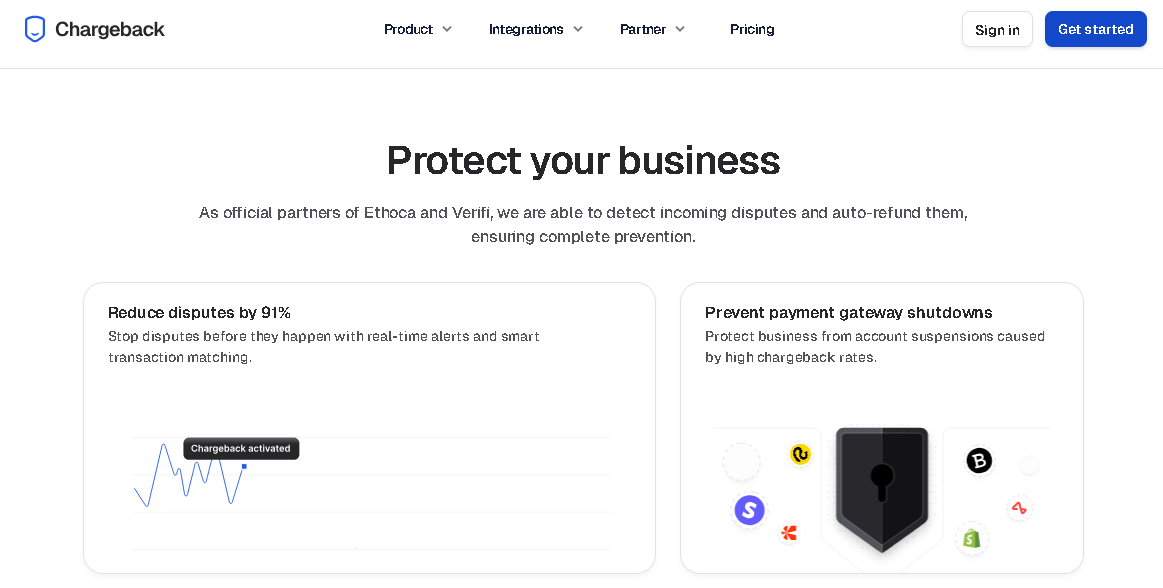
1. Chargeback.io: best for pre-dispute prevention
- Best for:
- Merchants whose dispute volume is largely preventable
- Sellers with a dispute rate climbing toward a processor limit
- Stores with nobody assigned to chargebacks
- Pricing: $15 to $29 per alert, no monthly minimum
- Features: Ethoca and Verifi (RDR, CDRN) alerts, automatic refunds, subscription cancellation, processor health, MCP for account help, Business Health (chargeback source insights)
- Replaces in Chargebacks911: Nothing directly, since it works before the filing Chargebacks911 responds to
We prevent chargebacks before they happen, using card-network alerts that trigger an automatic refund while the dispute is still a dispute. The alerts come from Ethoca alerts on the Mastercard side and Verifi alerts on the Visa side.
The mechanism depends on timing. When a cardholder questions a charge with their bank, the network can tell you before the bank opens a case. Selling into that window is what we do.
You refund the charge, the customer gets their money, and the case closes before it files. Your chargeback rate holds and you pay no dispute fee.
Coverage improves when you enroll on both networks, because each is strongest on its own brand:
We treat that pair as the default. Our explainer on how RDR and CDRN differ covers the fallback when RDR isn't open to you.
Alerts work on customers who recognize the charge and dispute it anyway. With a bad descriptor, the alert fires and the refund goes out, but you pay again every time that same cause repeats.
See how alert pricing works to run the numbers against your dispute volume.
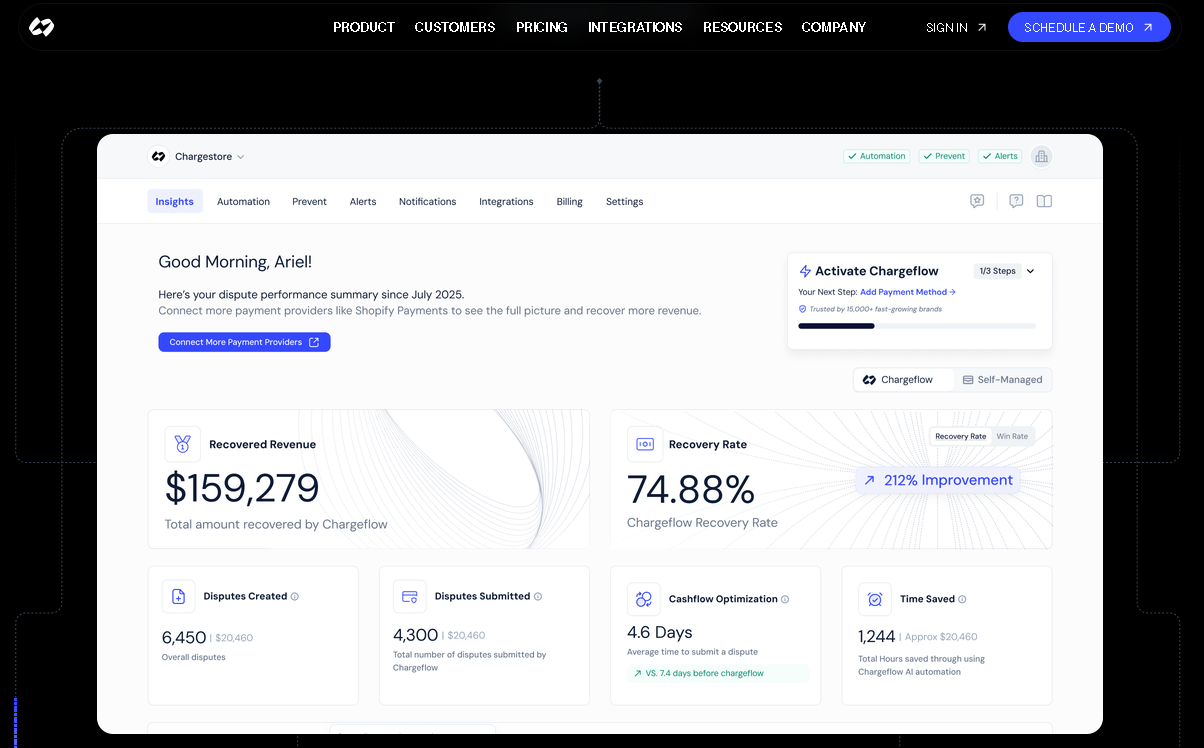
2. Chargeflow: best for automated remediation
- Best for:
- Merchants who want recovery automation with prevention layered on
- Stores that prefer paying only when a dispute is won back
- Sellers who want one dashboard across several processors
- Pricing: A percentage of each recovered chargeback, plus separate per-transaction scanning and per-deflected-alert fees
- Features: Automated evidence submission, alerts add-on, transaction scanning, analytics
- Replaces in Chargebacks911: Dispute response and recovery
Chargeflow automates chargeback recovery and sells alerts as an add-on, which makes it a remediation vendor like Chargebacks911. Its core product fights disputes that have already been filed.
That ordering shapes what you get. The engine submits evidence on filed cases, so the alerts are an add-on to a recovery-first business. If prevention is the main thing you want, a pre-dispute vendor is the better buy.
We compare the two head to head in our breakdown of more Chargeflow alternatives.
Recovery-automation vendors typically bill a percentage of what they win back, so confirm Chargeflow's current terms directly. On that model, a strong month for recoveries is also your biggest invoice.
That model pays the vendor more when more disputes file, and every filing raises your chargeback rate.
3. Chargeblast: best for a prevention-only peer
- Best for:
- Merchants comparing prevention vendors on coverage and enrollment speed
- Stores that want alerts without any recovery product attached
- Pricing: Per alert, quoted on request
- Features: Ethoca and Verifi alert coverage, refund automation
- Replaces in Chargebacks911: Nothing directly, since it also works before filing
Chargeblast runs the same pre-dispute alert model we do, so the choice comes down to coverage and enrollment speed.
Because the models match, the comparison comes down to enrollment speed and card-mix coverage. The two also publish very different amounts about how the alert networks work. With Chargeblast, you'll get the mechanism from their sales team rather than their site.
Ask both vendors the same two questions before you sign:
- Which networks will my account actually be enrolled in?
- How long does each enrollment take to go live?
Visa's automated route takes up to seven business days to switch on.
A dispute filed before that date never triggers an alert. Judge the service in week one and you're judging days when the alerts weren't on yet.
4. Chargeback Gurus: best for managed remediation
- Best for:
- Merchants with nobody in-house to own dispute response
- Stores that want the work done rather than a dashboard to run
- Pricing: Custom quote, no public tiers
- Features: Managed dispute response, prevention consulting, reason-code analysis
- Replaces in Chargebacks911: The full managed service, on the same ground
Chargeback Gurus sells managed chargeback services, which makes it another remediation alternative to Chargebacks911. A human team handles dispute response on your behalf.
Here's the trade you're making. You hand off the work and pay for the people doing it. That labor is priced into every case, so per-case rates usually run above self-serve software.
Most of their public articles teach consumers how to dispute a charge. That's a different reader from the merchant defending one.
A managed service earns its price when you have no one to do the work. If nobody on your team owns disputes today, paying a team beats letting response deadlines pass unanswered.
Once someone does own it, you're buying labor you already have, and self-serve tools cost less for the same outcome.
Why Chargebacks911's FTC settlement matters here
The settlement matters because it bars Chargebacks911 from some merchant types and prohibits the evidence practice that got it sued. You own the outcome of evidence a vendor sends in your name.
Chargebacks911 settled the FTC and Florida action in November 2023. The order limits which merchants it can serve and bars it from submitting inaccurate or misleading dispute materials. The FTC filed its complaint in April 2023 in federal court in Florida.
The case turned on what the company sent to banks. The FTC said it sent banks altered website screenshots that showed different terms than customers saw at the time of purchase.
The order also carries a price. It required a $150,000 payment to the State of Florida.
The company can no longer serve merchants that combine all three of these:
- Affiliate-network sales
- Negative-option or recurring billing
- Cosmetics, dietary supplements, or drugs
Large public companies get narrow exceptions.
Check your own billing model against those three before you weigh this. The ban covers that combination and one evidence practice.
If you sell outside those types, it does not touch you.
The underlying question still applies to any remediation vendor you hire. They send evidence to banks in your name, and you own the outcome when that evidence is wrong. You lose the case, and the bank reads your next submission more skeptically.
What does Chargebacks911 cost vs the alternatives?
Chargebacks911 quotes privately, with outside estimates near $1,000 to $3,000 a month plus a minimum, while we bill per alert with no minimum. That range covers enterprise contracts. It stays an estimate until they quote you.
Each category prices the way its work is done. Remediation vendors price around dispute volume and the account managers a service model needs. A contract and a minimum make sense there. The other two follow their own category.
Recovery automation usually takes a cut of what it wins back, and managed services bill a retainer.
Alert-based prevention prices around the alerts you get, because an alert is the unit of work.
You pay when there's something to prevent.
Low volume is where that difference costs you the most. A quiet month still costs you the full minimum on a remediation contract. Pay-per-alert prevention costs less, and that gap opens before you compare win rates.
Our chargeback ROI calculator runs that math against your own numbers.
How to choose a Chargebacks911 alternative
Four checks decide which alternative fits, and they work best in order. The first one rules out most of the list before price matters:
- Whether you need disputes stopped before they file or fought after.
- Your dispute volume against each vendor's pricing model.
- Whether the vendor will take your merchant category.
- What happens to the disputes already in flight.
1. Decide whether you need prevention or remediation
Sort your last 90 days of disputes by whether an alert could have stopped them. That split decides which category you shop. Pull the reason codes and mark each one. Unrecognized charges and cancellations are the ones an alert reaches.
Prevention vendors get paid to stop the dispute before it exists. They never touch a chargeback that already filed. Remediation vendors get paid on filed disputes, so they can't bring your rate down.
Volume in both columns means you need both. Treat that as a stacking decision rather than a vendor choice.
2. Match dispute volume to the pricing model
Price each vendor against your own monthly dispute count, because a flat minimum and per-alert billing invert at low volume. Divide last quarter's dispute total by three, then run that figure through each model.
A monthly minimum needs enough disputes underneath it to beat a per-unit price. That's why vendors quoting minimums put pricing behind a sales call.
A percentage of what a vendor recovers has no floor, and no cap either. A large recovery can cost more than a contract would have.
3. Confirm the vendor will take your merchant category
Ask whether the vendor serves your merchant category before you take a quote. At least one vendor here is under a court order limiting which categories it can serve. Put the question in the first email.
A vendor barred from your category can't onboard you at all, whatever the fit or budget. So a mismatch wastes the whole evaluation. Merchants combining affiliate sales, recurring billing, and supplements should check hardest.
Those restrictions bind the vendor rather than you. A merchant outside the restricted set is unaffected.
4. Ask what happens to in-flight disputes
Get the handoff terms for filed disputes in writing before you sign. A switch mid-dispute can strand cases against network deadlines. Ask who files the ones open on your switch date.
Representment runs against fixed network response windows. A case that changes hands late in its window can miss the deadline and lose by default. That turns a vendor switch into lost money.
A prevention-only vendor has no in-flight disputes to inherit. This check applies only when you leave a remediation vendor.
FAQ
Is Chargebacks911 worth it for a small merchant?
Usually not, because a contract with a monthly minimum costs the same whether your dispute volume is high or low. Ask for the minimum in writing before you compare per-case rates.
What's the difference between Chargebacks911 and Justt?
Justt automates evidence building with AI, while Chargebacks911 sells a broader managed service with people doing the work. Both act only after a chargeback files.
Can I switch vendors without losing in-progress disputes?
Disputes already submitted stay on their timeline, because the card network and your acquirer run those clocks. Get the open-case list with deadlines in writing, then name one owner for each until the new vendor is live.
Do prevention tools replace a remediation vendor entirely?
Alerts only act before filing, so keep an in-house owner or a per-case service for filed disputes. Most merchants use prevention to cut the volume of new ones.