5 Best Chargeblast Alternatives, Compared (2026)


The best Chargeblast alternatives split by what they actually do. Alert tools stop a dispute before it turns into a chargeback, which is Chargeblast's own category. Remediation tools fight chargebacks once they file. Fraud-scoring tools screen orders at checkout and sell a third thing entirely.
I've run alert tooling and built representment evidence on my own stores, and the two solved different problems. A merchant leaving Chargeblast can end up buying software for the job they don't have. Read the categories first, then pick the vendor.
Key takeaways
- Chargeblast runs alert-based prevention, so its closest peers are other alert vendors.
- Prevention alerts run $15 to $29 each, so compare coverage and price.
- Automated representment claims a 300% average win-rate lift on filed disputes.
- Pick remediation only when filed chargebacks are already waiting on a response.
- Fraud-scoring tools score orders at checkout, so they replace neither category.
Want the prevention half handled? Start catching disputes before they file with our pay-per-alert coverage.
What are the best Chargeblast alternatives?
Chargeback.io is the closest alternative to Chargeblast, because both run the same alert-based prevention model. Chargeflow, Chargebacks911, and Chargeback Gurus all work on chargebacks that already filed. Chargeblast sells pre-dispute alerts, so a like-for-like swap means comparing alert coverage and per-alert price. Anything else on the list is a different category of purchase. Three categories sit behind those names:
- Alert-based prevention: refunds the dispute before it becomes a chargeback (Chargeblast's own category)
- Remediation: answers a filed chargeback with evidence and tries to win it back
- Fraud scoring: screens orders at checkout and blocks the risky ones
Buy remediation and you get a tool for disputes you've already lost. Buy fraud scoring and you get a tool that works before the sale.
Our guide to chargeback prevention software covers the wider vendor field if you want that view first.
The category you need follows from where your money goes today. Alerts help when customers dispute charges they made and forgot. Representment helps when customers dispute charges you can prove they authorized and received.
Those are different complaints, and one tool won't cover both.
Plenty of merchants end up needing two of the three. A backlog of filed disputes still needs a remediation vendor, whatever prevention tool you buy next. An alert only reaches a dispute while it's still a dispute.
Chargeblast alternatives at a glance
Chargeback.io, Chargeflow, Chargebacks911, and Chargeback Gurus are the four vendors worth comparing against Chargeblast. Each sits in a different category. Here's how they line up:
- Chargeback.io: best for a prevention-only peer
- Chargeflow: best for automated remediation
- Chargebacks911: best for managed representment at scale
- Chargeback Gurus: best for managed remediation services
Chargeblast sits in the last row for reference:
Here's what each one does and who it fits, starting with the closest match to Chargeblast's own model.
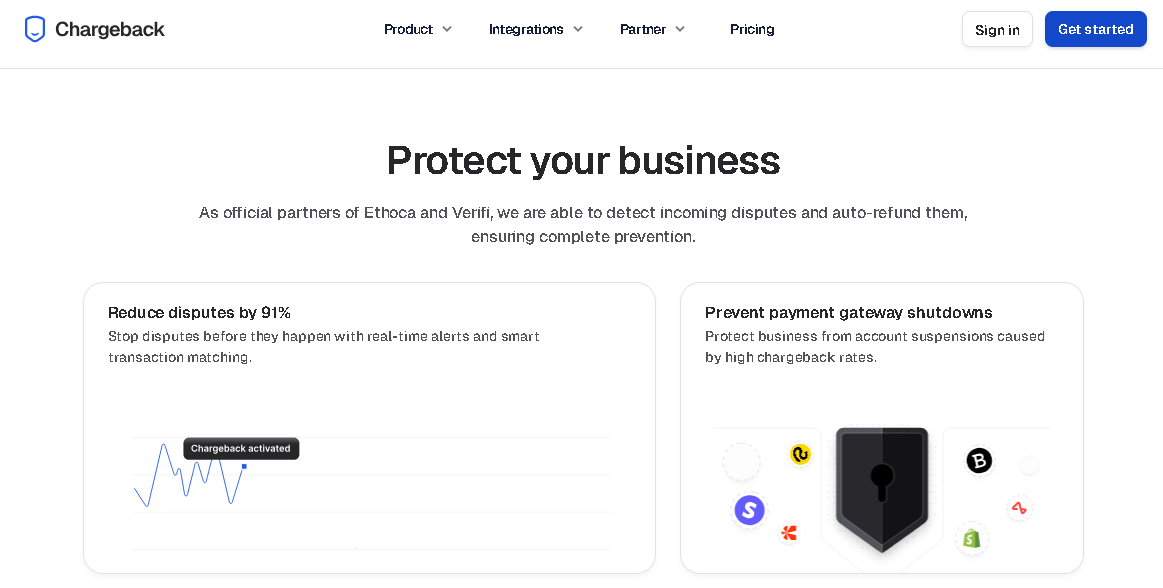
1. Chargeback.io: best for a prevention-only peer
- Best for:
- Merchants who want prevention as the whole product
- Sellers nearing a card-network monitoring threshold
- Stores with no dedicated dispute staff
- Category: Alert-based prevention, the same category as Chargeblast
- Pricing: $15 to $29 per alert, no monthly minimum
- Alert networks: Ethoca (Mastercard), plus RDR and CDRN via Verifi alerts
- Features: Business Health (chargeback sources), MCP for account help, automatic refunds, custom rules, alert history, processor integrations
We run the same alert-based, pre-dispute model Chargeblast runs, which makes us the closest like-for-like swap. Both companies buy into the card networks' alert programs, match each alert to your orders, and refund before the dispute becomes a chargeback.
That leaves two questions. How much of your card volume does the coverage reach, and how fast does the refund go out?
We pull Ethoca alerts on the Mastercard side, and Visa runs on a separate enrollment.
Our breakdown of how the alert networks differ has the detail. Pull your last 90 days of orders by card brand, then match that split against each vendor's networks.
Alerts only work when the customer recognizes the charge.
Say your descriptor shows a name your customer struggles to place. You pay for the alert, you refund the order, and the same customer disputes the next charge anyway. Set the descriptor in your processor's settings to the storefront name buyers see at checkout.
Catch disputes before they file with our pay-per-alert prevention, billed per alert and nothing per month.
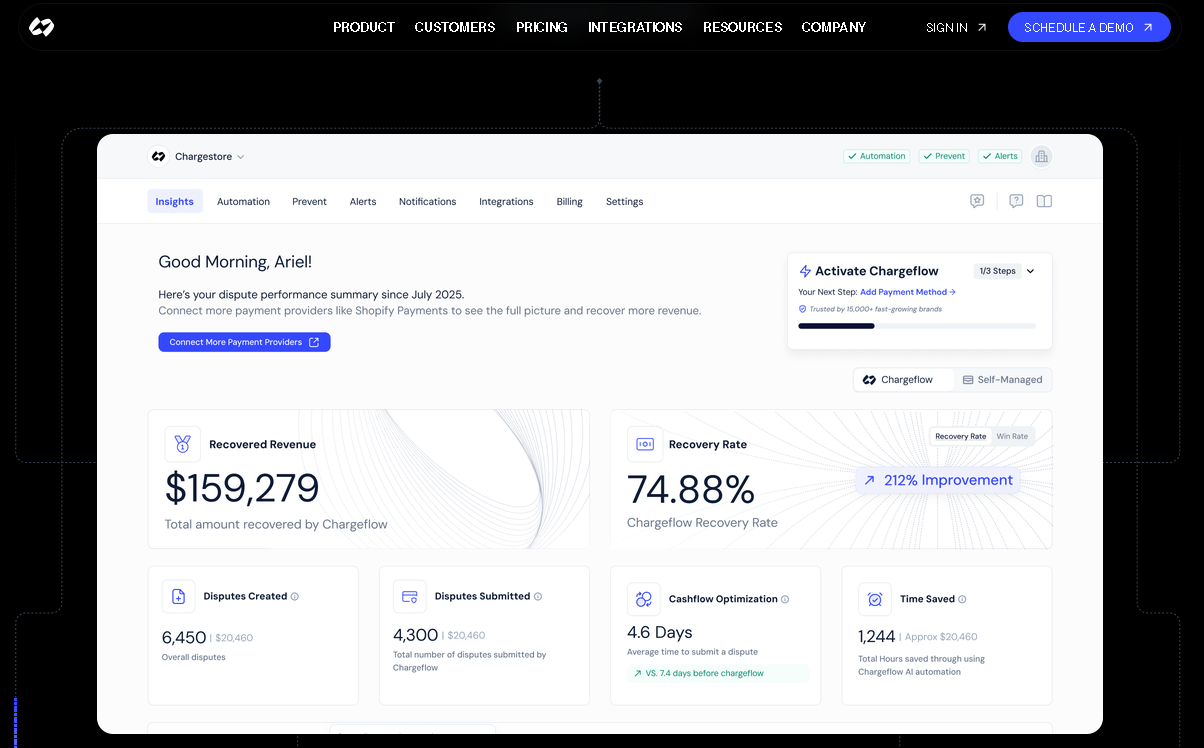
2. Chargeflow: best for automated remediation
- Best for:
- Merchants sitting on disputes that have already filed
- Sellers who want dispute responses written without hiring an analyst
- Stores comfortable paying a share of what gets recovered
- Category: Remediation, with alerts sold as a secondary product
- Pricing: A percentage of each recovered chargeback on the automation tier, plus separate per-transaction scanning and per-deflected-alert fees
- Features: Automated evidence submission, chargeback alerts, transaction scanning, analytics dashboard
Chargeblast sends alerts that stop a dispute becoming a chargeback, while Chargeflow works the chargebacks that already filed.
Representment is Chargeflow's core product, the formal process of answering a filed chargeback with evidence. Chargeflow added alerts to that dispute-fighting business, and Chargeblast started with alerts.
Chargeflow's pricing page claims a 300% win-rate increase on average for the automation product. That figure counts chargebacks recovered, a different event from the disputes an alert vendor stops.
The pricing model tells you which product a vendor is built around. Chargeflow's automation tier takes a cut of what it recovers, so it earns when disputes file and get won. An alert vendor earns per alert, so it earns when disputes get stopped.
Watch the fee stacking if you run their alerts alongside the automation. That's two line items for one dispute problem.
Merchants who want prevention as the main product are shopping the wrong category here, and our roundup of more Chargeflow alternatives works through the rest of the field.
3. Chargebacks911: best for managed representment at scale
- Best for:
- Larger merchants with steady monthly dispute volume
- Teams with someone who owns the dispute queue
- High-risk sellers who want compliance and audit work included
- Category: Remediation, delivered as an enterprise platform and service
- Pricing: Custom quote, no public tiers, typically an annual commitment
- Features: Representment, dispute-source analysis, compliance checks, merchant audits
Chargebacks911 is a post-dispute representment vendor built for high dispute volume, so it sits outside Chargeblast's prevention category. It's here because merchants comparing Chargeblast alternatives keep running into it.
It handles chargebacks that already filed, which is the later problem, and the practical filter on it is scale.
Enterprise representment vendors price by custom quote and usually want an annual commitment. That suits a merchant with steady dispute volume and someone who owns the dispute queue. A smaller merchant with a handful of disputes a month pays for capacity they won't use.
Their positioning, pricing shape, and regulatory history need more room than a category placement. Our breakdown of Chargebacks911's full positioning has all three, including the settlement history worth reading before you sign anything.
4. Chargeback Gurus: best for managed remediation services
- Best for:
- Merchants who want dispute handling off their desk entirely
- Sellers whose dispute mix needs case-by-case judgment
- Teams without the headcount to work a dispute queue
- Category: Managed service, combining representment with prevention consulting
- Pricing: Custom quote, no public tiers
- Features: Prevention alerts, representment, analytics, dispute-strategy consulting
Chargeback Gurus delivers chargeback handling as a managed service, a different model from Chargeblast's self-serve alert dashboard. A team works your disputes for you, pairing representment with prevention advice.
The practical difference is who does the work. With Chargeblast or with us, you log into a dashboard and automation runs on rules you set. A managed service means someone else reads the dispute, builds the response, and reports back.
Managed services usually cost more per case, because you're paying for people instead of automation. What you buy for that premium is judgment on the cases automation reads wrong.
A human reviewer can tell a repeat abuser from a confused first-time buyer and respond differently. Automation applies the same rule to both.
The trade is speed and control. You wait on someone else's queue, and you see the outcome rather than the decision. Merchants who want to tune their own refund thresholds week to week find that frustrating.
Keeping dispute work in-house points you back toward a self-serve alert tool.
How to choose a Chargeblast alternative
Four checks decide which alternative fits, and they work best in order. The first one rules out most of the list before price matters:
- Whether you need prevention, remediation, or fraud scoring.
- Which alert networks cover your own card mix.
- Your dispute volume against each vendor's pricing model.
- How fast the vendor goes live.
1. Pick the category you actually need
Sort your last 90 days of disputes by whether an alert could have stopped them. That split decides which category you shop. Pull the reason codes and mark each one.
Prevention stops the dispute before it exists and never touches a filed chargeback. Remediation fights filed disputes and can't lower your rate. Fraud scoring acts before you approve the order, so it touches neither.
Real volume in two of the three means you need two tools. Treat that as a stacking decision rather than a vendor choice.
2. Match the alert networks to your card mix
Pull the card brand split on your own disputes. Confirm the vendor covers the network most of them arrive on. Your processor's dispute export has the brand on every row.
Ethoca carries Mastercard disputes, and Verifi's RDR and CDRN carry Visa disputes. A vendor missing the network behind most of your volume leaves most of your disputes unreachable, however good the product is.
Coverage also varies by reason code inside a network. Full network coverage still isn't every dispute on it.
3. Price the vendor against your own dispute volume
Multiply your monthly alert count by each vendor's per-alert price first. It's the only figure here you can check yourself. Both numbers sit on your own statements.
Pay-per-alert billing tracks real dispute volume, so a quiet month costs almost nothing. A flat minimum needs enough disputes underneath it to justify the floor.
A percentage of recovered funds has no monthly floor, and no cap either. It can pass a flat contract on a large recovery.
4. Check how fast it goes live
Ask for the enrollment timeline in hours or days. Alert vendors differ by about a day, and a merchant near a monitoring threshold pays for every day of waiting. Get it before you sign.
Alert enrollment is a network registration rather than a code integration. The vendor's onboarding sets the timeline, so your engineering queue stays out of it.
A fraud-scoring or remediation vendor takes genuinely longer to set up. Don't carry a same-day expectation across categories.
FAQ
What does Chargeblast do?
Chargeblast sells pre-dispute alerts, telling merchants about a dispute so they can refund it first. It runs as self-serve software with a dashboard rather than a managed service.
Is Chargeblast good?
Yes, Chargeblast is a working alert vendor with an established market presence. Whether it fits you depends on your card-brand mix and what you can spend per alert.
What is the difference between Chargeblast and Chargeflow?
Chargeblast is an alert vendor and Chargeflow is a representment vendor, so one stops the chargeback and the other wins it back. Merchants running both pay for two separate jobs.
Do I still need alerts with a fraud-scoring tool?
Usually yes, because fraud scoring blocks suspicious orders at checkout and alerts catch disputes on orders that were approved and legitimate. The two tools cover different failure points.