Should You Use American Express Accelerated Dispute Resolution?

I used to work in Support for a chargeback prevention service, and I saw plenty of tickets asking for more American Express coverage.
Ethoca Alerts and CDRN offer little coverage for American Express. Because of that, I often pointed merchants to AmEx ADR. It’s one of the best ways to prevent AmEx chargebacks in non-fraud categories.
This guide explains what AmEx ADR is, how it works, and how to enroll.
Let’s start with what it is.
Key Takeaways
- Works best as a part of any chargeback prevention toolset
- Accelerated Dispute Resolution is free
- Only available to those with US Merchant IDs
- Merchants must sign up directly through American Express
- Doesn’t work with fraud-coded disputes
- Enrollment requires an AmEx Merchant ID or Access Code
You still need chargeback prevention coverage for other card networks. Chargeback prevention alerts through Chargeback.io can help fill those gaps. Through our Ethoca and Verifi partnerships, we have prevented 9 out of 10 chargebacks for many merchants.
Learn how chargeback prevention alerts work.
What is AmEx Accelerated Dispute Resolution?
Accelerated Dispute Resolution, or ADR, is a pre-chargeback dispute alert program from American Express. ADR routes certain non-fraud disputes to the merchant as a Dispute Alert.
The merchant then gets up to 8 calendar days to respond. If the merchant doesn’t respond, the case enters the standard disputes process.
ADR Eligibility and Limitations
ADR has two eligibility limits for merchants:
- US Merchant IDs only
- Non-fraud disputes only
Merchants with non-U.S. Merchant IDs should assume ADR is unavailable. Unless their American Express relationship team confirms otherwise.
Accelerated Dispute Resolution doesn’t apply to fraud-related dispute codes. That matters because fraud-coded disputes make up a large share of total disputes.
ADR also won’t work with other card networks like Visa and Mastercard. Merchants that want pre-dispute coverage for those card networks need pre-dispute. They’ll then need to sign up for these alerts under Ethoca and Verifi, or chargeback alert resellers, for protection in those card networks.
Further reading:
Getting Coverage for Fraudulent AmEx Transactions
Merchants that process American Express transactions in the United States can sometimes get added coverage for fraud-coded AmEx chargebacks through Ethoca Alerts and CDRN.
To get that coverage, the merchant must first enroll through an eligible chargeback alerts reseller. Once enrolled, then complete that reseller’s enrollment process.
At Chargeback.io, for example, the merchant provides a few extra details and we handle the enrollment steps from there.
How Accelerated Dispute Resolution Works
American Express Accelerated Dispute Resolution follows this flow:
- Dispute starts: The cardmember disputes a transaction.
- Alert is sent: Dispute alert arrives in merchant dashboard.
- 8-day response window opens: Merchant has up to 8 calendar days to respond.
- Merchant chooses a response: Business must choose how to respond to the alert.
- Case is resolved: If the merchant resolves the case during ADR, the dispute can close.
If the merchant misses the ADR alert, the dispute continues through the normal lifecycle. American Express may then issue either an inquiry or an upfront chargeback.
Deciding How to Address ADR Alerts
Use these decisions to understand how to address different response options for ADR:
| Response | What it means | When to Choose |
|---|---|---|
| Refund | Refund the cardmember and end the dispute | When you’re likely to lose, the amount is low, or protecting your chargeback ratio matters more than keeping the sale. |
| Challenge | Defend transaction now, inside ADR | When you have strong evidence and want to keep revenue without letting the case move into the standard dispute flow. |
| Settle with cardmember | Try to get the cardmember to withdraw the dispute | When the issue looks fixable and you have a realistic chance of reaching the cardmember quickly. |
| Push to dispute process | Move the case out of ADR and proceed with the normal dispute process | When you need more time, the case is complex, or the case looks defensible but not within the ADR window. |
These directions are reference points, not fixed rules. Use your best judgment when choosing the right response.
Typical AmEx Dispute Lifecycle
In the standard American Express dispute lifecycle, cardmembers usually have up to 120 days from the transaction date to dispute a charge. American Express first tries to resolve the issue with the cardmember.
If the dispute moves forward, American Express may do one of two things:
- Issue an inquiry
- Issue an upfront chargeback
ADR adds an earlier merchant-facing step to that lifecycle. For eligible disputes, American Express sends a Dispute Alert before the case reaches the normal chargeback process.
Further reading:
Benefits of Accelerated Dispute Resolution
ADR can prevent an eligible dispute from becoming an upfront chargeback. That gives merchants several benefits:
- No chargeback fee: The payment processor and AmEx don’t charge chargeback fees.
- Less admin work: The merchant may avoid the time required to gather and submit evidence.
- Less pressure on chargeback rates: Less likely to create issues with payment processors.
- Free to use: ADR adds protection without adding cost.
The biggest benefit is usually chargeback ratio protection. A high chargeback rate can lead to processor scrutiny, account shutdowns, or placement in card network monitoring programs. Those programs can trigger added fines and operational consequences.
Further reading:
- Understanding chargeback ratios and their impact
- Breaking down chargeback monitoring programs
- True costs of chargebacks
How to Enroll in ADR
Summary: Create an AmEx merchant profile, enable disputes, then enroll in ADR through the portal.
Follow these steps to enroll in Accelerated Dispute Resolution through American Express.
Step 1. Start Creating a Merchant Account
Go to americanexpress.com/merchant and click Create Account to set up an Online Merchant Profile with American Express.
American Express requires the following information:
- Merchant ID or Access Code
- First and last name
- Phone number
If you already have an American Express Online Merchant Account, move to Step 2.
Scenario 1. Getting An AmEx Merchant ID if You Receive Payments from AmEx
This step only applies to merchants that accept payments directly from American Express.
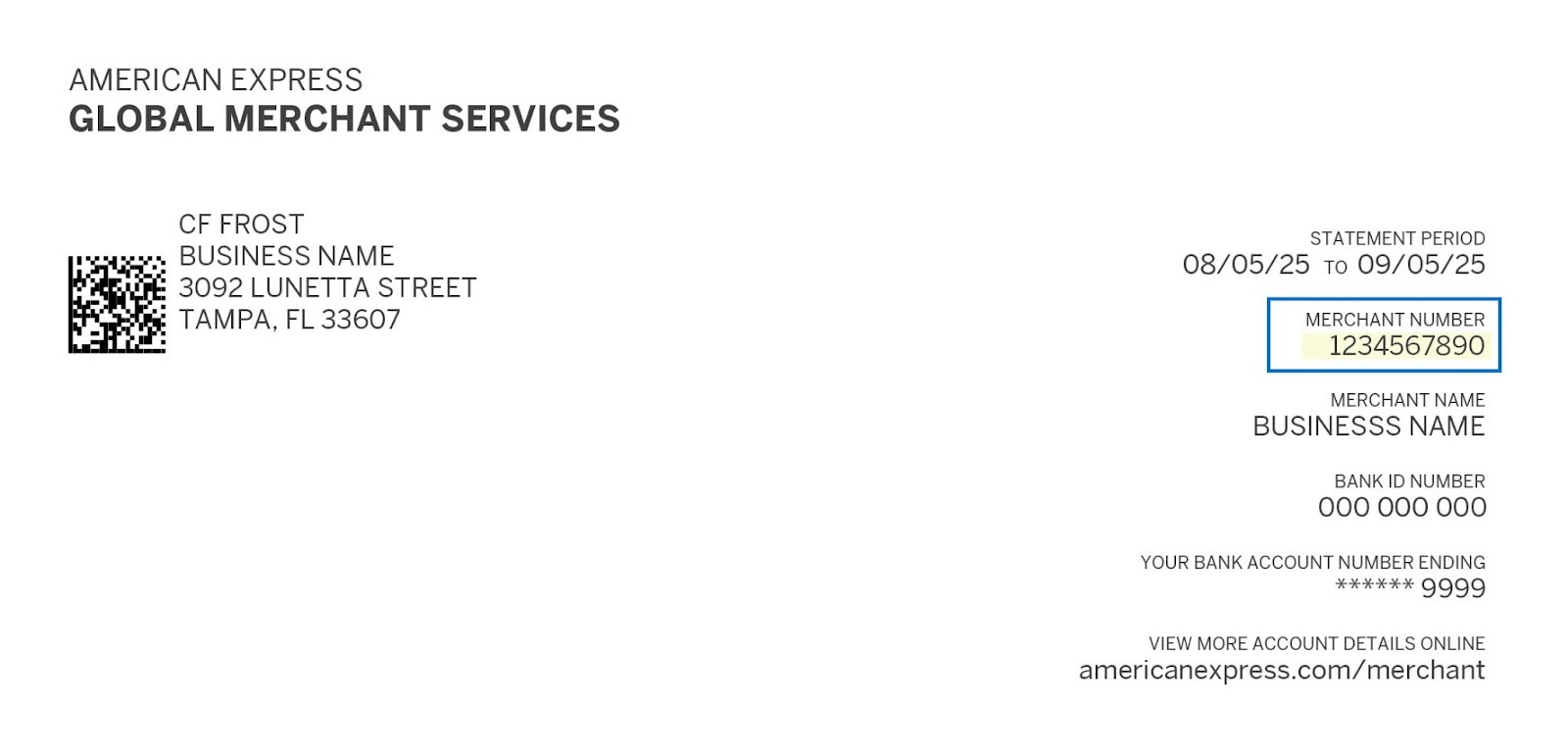
The American Express Merchant ID appears on the first page of the Financial Activity Statement. AmEx may also have sent it by email or letter when the account was set up.
Merchants with portal access can also look under View/Update Account. American Express says the Merchant Account Number appears there.
Scenario 2. What to Do If You Don’t Receive Payments from AmEx
Merchants that use a processor like Stripe need an Access Code instead of an AmEx Merchant ID. Enter that Access Code in the Merchant ID field during registration.
Don’t use the payment processor’s Merchant ID. American Express will not accept it.
Check for an American Express Merchant Services email that contains the Access Code.
If that email never arrived, call American Express at 1-833-213-0506 and ask for the Access Code for third-party processor merchant registration. Have the EIN or Tax ID and the authorized signer’s name ready.
Once American Express provides the Access Code, continue the enrollment process.
Step 2. Enable Resolve Disputes
During the final steps of account registration, on the Manage Finances page, check the Resolve Disputes box to enable dispute management.
Merchants that already created an account can go to the Account Summary page, or dashboard, and click Activate.
Step 3. Enroll in Accelerated Dispute Resolution
After the Merchant Account is active:
- Go to Disputes in the top navigation
- Open Accelerated Dispute Resolution in the sidebar
- Click Enroll for Free
- Complete the form
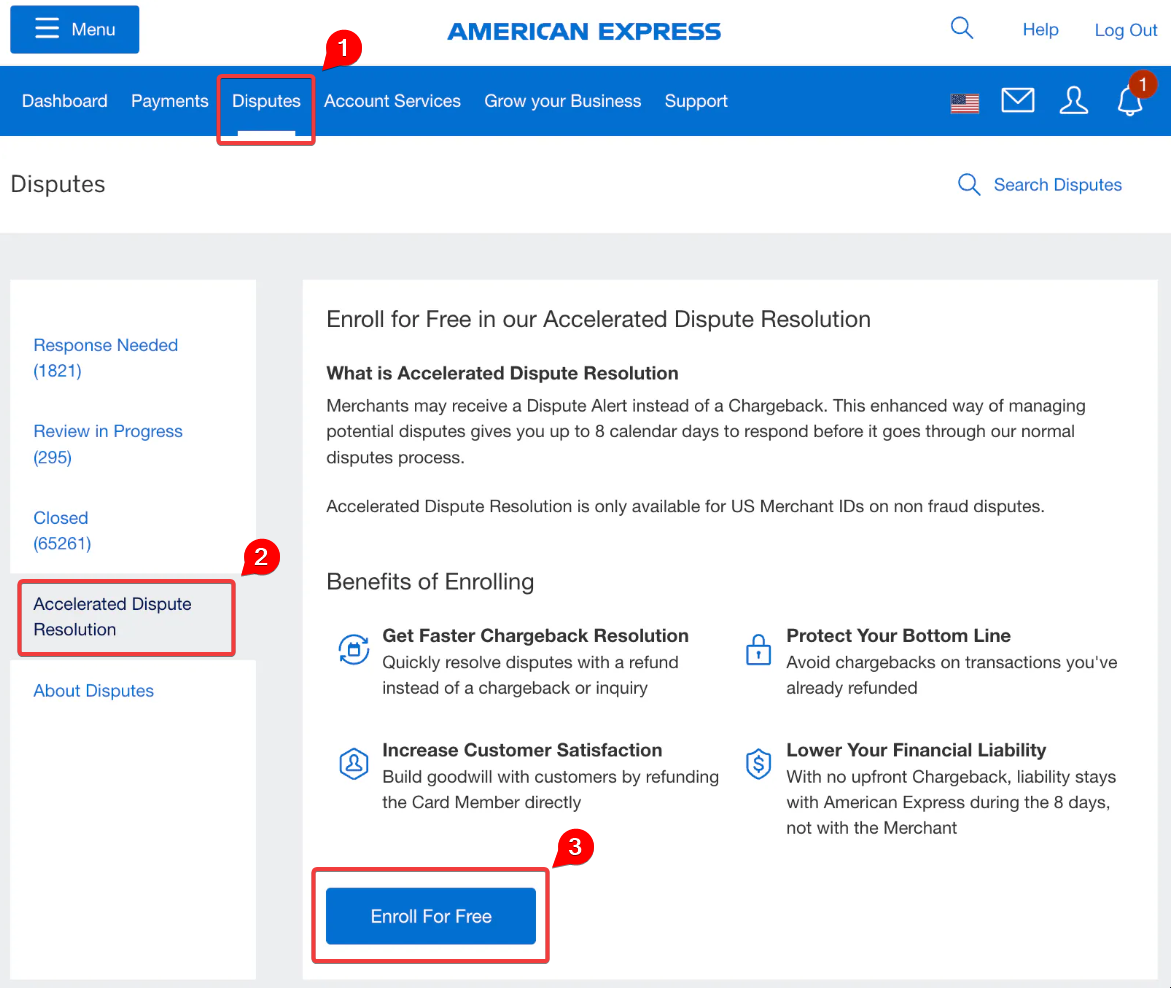
After the form is submitted, an American Express representative will reach out with the next steps.
How Effective is ADR in Preventing Chargebacks?
American Express doesn’t publish public data showing what percentage of upfront chargebacks ADR prevents.
I still recommend that eligible merchants consider ADR. ADR adds another layer to a chargeback prevention stack, and it does so at no cost.
Recap
Eligible merchants that accept American Express should consider adding ADR to their chargeback prevention stack. ADR is free, and it adds another chance to stop a dispute before it becomes a chargeback.
For stronger coverage, most merchants should combine several tools:
- Verifi RDR and Ethoca Alerts
- Additional fraud-coded coverage enabled for American Express and Discover
- AmEx Accelerated Dispute Resolution
- Fraud prevention tools
- Order Insight and Compelling Evidence 3.0
- Optimized billing descriptors
Merchants that want the first two tools need a pre-dispute alerts reseller that offers them. Chargeback.io provides RDR, Ethoca, and CDRN alerts, along with a team that can help merchants get started.