Crypto Payment Chargebacks: What Merchants Should Know


Cryptocurrency payments on the blockchain are final, so nobody can charge them back. The chargeback exposure inside a "crypto payment" comes from the card that funded the purchase.
Most of what gets called a "crypto chargeback" is really a card dispute wearing a crypto label. Chargeback.io's own alert data shows the same pattern across every account that touches a card. The exposure is never the asset. It's the card leg of the purchase.
Read on and you'll know which of your payment flows can be disputed, and what to do when a crypto payment goes wrong.
Key takeaways
- Blockchain payments settle for good, so no dispute can reverse them.
- Watch the card charge, because card-funded crypto buys stay fully disputable.
- Americans reported $11.4 billion in crypto scam losses last year.
- Report scams at complaint.ic3.gov, where the FBI can sometimes freeze funds.
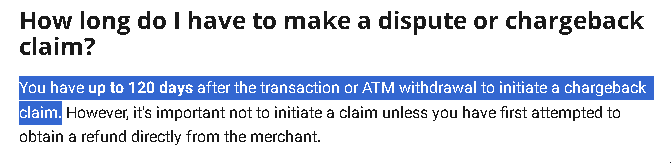
- Open a prepaid-card claim within 120 days of the transaction.
- You trade dispute immunity for price swings and tax tracking.
Taking card payments alongside crypto? See how alerts work on the card side of your sales.
Can You Do Chargebacks on Cryptocurrency?
A cryptocurrency transaction confirmed on the blockchain cannot be reversed or charged back. There is no card network, issuing bank, or dispute process for a wallet-to-wallet transfer. The chargeback risk merchants actually face comes from how the crypto was funded.
If a customer buys crypto with a credit or debit card, that card purchase can still be disputed and charged back like any other card transaction.
A chargeback works because the card network processes the payment between the buyer's bank and yours. It can order the buyer's bank to take the money back. That's how a chargeback works on every card sale you make.
A blockchain transfer has nobody in the middle. The buyer's wallet signs the transfer, the network confirms it, and no authority above the network can undo it. The Fair Credit Billing Act gives US cardholders their dispute rights over credit billing only.
One exception matters more than the rule for most merchants.
Card-funded crypto purchases are a different story. Someone might buy crypto with a credit or debit card, or spend through a crypto-branded prepaid card like Crypto.com's.
That card charge (what the industry calls the card leg) runs on ordinary card rails. It carries full dispute rights and can be charged back like any other card sale, even though the crypto it bought is gone for good.
Will Accepting Crypto Prevent Chargebacks?
Crypto only prevents chargebacks on the crypto sales themselves, and any card payments you still take keep full dispute exposure. Paying by wallet gives up the card-based consumer protections a dispute runs on.
Whether a payment can be disputed depends on how the customer paid you. A customer who pays you in Bitcoin has one route to a refund, which is asking you directly.
That is a real cut in your exposure, and it's why some high-dispute categories look at crypto.
The protection covers direct wallet-to-wallet payments only. If your checkout lets customers fund a crypto payment with a card, that card charge keeps full dispute exposure. Check which payment methods route through a card processor, and keep your chargeback controls on those.
A friendly-fraud dispute can still land on the card sale you ran last Tuesday. The Bitcoin you took on Wednesday does nothing to stop it.
Should You Accept Crypto as a Merchant?
Accept crypto only if your margins can absorb a price swing between payment and conversion. You gain dispute immunity, but you take on volatility and tax tracking. Five factors decide the call, and some favor crypto while others argue against it.
How much each one matters depends on what you sell and where your customers are. Read them against your own margins:
Volatility is the factor with the widest range of outcomes. Crypto prices move fast on news and speculation, and a sharp swing can arrive within hours of a customer paying you.
Say a customer sends you $500 in Bitcoin in the morning.
The price slides 4% before your afternoon conversion. You booked a $500 sale and banked $480. Convert incoming crypto to fiat on receipt instead of holding a balance, and price in a margin buffer when your processor settles on a delay.
Many acquirers also classify crypto businesses as high risk, alongside gaming and gambling. So you may pay higher processing fees or face a rolling reserve if crypto grows into a large share of your volume.
What to Do If You Sent Crypto to a Scammer
You can't get crypto back from a scammer the way a card issuer pulls back a charge. Two paths are left. Report it to law enforcement, and pay for tracing on a big loss.
Americans lost $11.4 billion to crypto scams last year across 181,565 complaints, per CoinDesk's report on FBI data.
The FBI's Internet Crime Complaint Center, or IC3, takes those reports. It shares them with field offices and can sometimes freeze the funds.
Tracing works differently. The ledger recording your payment is public, so specialists can follow it.
Take these steps:
- File a report at complaint.ic3.gov with the transaction hash, wallet addresses, and dates.
- Contact the platform the funds moved through, since exchanges sometimes hold balances first.
- File a police report locally, which platforms often require for their claims.
- Hire a blockchain-tracing firm only when the loss covers their fees.
Once funds pass through a mixer or leave a regulated exchange, recovery is rare.
Anyone offering to recover your crypto for an up-front fee is running a second scam. These advance-fee scams target people who already lost money once.
Dispute Policies on Major Crypto Platforms
Crypto.com's dispute policy allows card disputes up to 120 days, Coinbase's reimbursement policy wants unauthorized-transaction claims within 45, and Transak's terms publish no window. All three cover card-funded activity and exclude on-chain crypto movement.
A prepaid card charge qualifies, and so does an unauthorized account login. The on-chain transfer sits outside all three, because no platform can reverse it:
Transak asks for more than the other two.
Users promise up front to dispute only a breach of the agreement or unauthorized card use, and the company can bill them for investigating one. None of these policies cover crypto sent from a user's own wallet.
Prepaid-card purchases in that table land on a merchant somewhere as a card chargeback. If you take card-funded sales, a chargeback alert reaches you before the dispute is filed.
Our coverage spans both card networks, and Visa-side alerts work the same way on that half of your volume.
Once a card-funded crypto purchase does dispute, check the reason code the issuer assigned before you respond.
How Crypto Compares to Other Payment Methods
Crypto and cash leave a buyer with no chargeback rights, while cards and card-linked wallets carry full dispute protection. What decides it is whether a bank or card network is part of the payment:
Peer-to-peer bank apps give buyers almost no dispute rights, which surprises a lot of sellers. We covered the same problem in our Zelle chargeback guide.
How a payment is funded decides whether it can be disputed. A wallet balance funded from a bank account behaves like a transfer. The same wallet funded by a Visa card carries every dispute right that card holds.
Cards bring one more variable. A customer who can't recognize your billing descriptor on a statement will dispute a charge they made themselves.
Hold onto that if you're weighing crypto to escape disputes, because most disputes trace back to something you control.
FAQ
Can a Bitcoin transaction be reversed once it's confirmed?
No, a confirmed Bitcoin transaction stays permanent on the blockchain. Only the person holding the receiving wallet can send the funds back voluntarily.
Are Bitcoin transactions reversible if I contact my bank?
Your bank can't reverse a Bitcoin transfer, because it never touched the transaction. Banks can only dispute the card purchase that bought the Bitcoin.
Can you go to jail for a crypto chargeback dispute?
Filing a dispute in good faith carries no criminal risk. Deliberately disputing charges you know are valid is fraud, and prosecutors do bring those cases.
Does purchase protection cover a crypto scam?
Card purchase protection covers physical goods rather than cryptocurrency purchases, and most issuers exclude crypto outright. Check your card agreement, because a few issuers cover unauthorized crypto purchases under standard fraud terms.
Crypto scam vs. crypto chargeback: what's the difference?
The difference is who can reverse it. A crypto scam has no reversal mechanism and goes to law enforcement, while a crypto chargeback reverses through the card issuer under normal network rules.