Theodore Sterling

Shopify NDRP: What It Means and How to Exit
Shopify NDRP automatically resolves eligible Shopify Payments disputes before a formal chargeback, and the three-part order check identifies the right path toward exit.
Chargeback Prevention: How Alert-Based Prevention Works
Main summary: Chargeback alerts let merchants refund disputes before they file, with network coverage, operating steps, and the limits alerts do not solve.

Generative AI Fraud: What It Means for Merchant Chargebacks
Generative AI fraud accelerates familiar fraud tactics with fake identities, media, and dispute narratives, while durable device, IP, and purchase-history evidence remains effective in a response.
Chargeback for Services Not Rendered: What to Do
A services-not-rendered chargeback alleges that promised work never happened, and the applicable network code, filing window, and shared delivery record determine how a customer or merchant should act.
AI Shopping Agents and Your Chargeback Risk
AI shopping agents send shoppers to ecommerce sites without changing the usual checkout fraud controls, but merchants need to identify when an agent initiates payment and confirm card-brand enrollment.
Dropshipping INR Chargebacks: Winning Without Tracking
Dropshippers can defend item-not-received disputes without scan-level tracking by building a layered fulfillment record, while recognizing which cases lack enough proof to win.

What Is a Merchant Account? How It Works, What It Costs, and What Puts It at Risk
A merchant account temporarily receives settled card funds, and its pricing, underwriting, and exposure to reserves or closure depend heavily on a merchant's dispute ratio.

Chargeback Arbitration: Costs and When to File
Chargeback arbitration is the binding final dispute stage, and its network-specific fees, filing windows, and expected recovery determine when an acquirer should file.

What Is Promo Abuse? How It Becomes a Chargeback
Promo abuse repeats or circumvents an offer and can later become a fraud or recurring-billing dispute, so identity checks, redemption limits, notices, and evidence records matter.
Adyen Chargebacks: Fees, Reason Codes, and Second Chargebacks Explained
Adyen chargebacks follow the card networks' reason codes and defense process, with fees, deadlines, second chargebacks, and arbitration determining whether a case is worth fighting.

Loyalty Fraud: How Stolen Points Become a Chargeback
Loyalty fraud exploits rewards accounts or points, and only card-linked losses can become merchant chargebacks, making account and redemption controls the practical defense.

What Is an ARN Number?
An acquirer reference number is the 23-digit identifier banks use to trace a card payment or refund, and it differs from a STAN, RRN, and merchant transaction ID.
Chargeback.io vs Signifyd: how they differ
Signifyd screens and guarantees orders at checkout, while Chargeback.io resolves reported disputes before they post, so their effect on revenue and chargeback ratio is different.
Deepfake Fraud: How It Bypasses Merchant Verification
Deepfake fraud uses synthetic media to pass signup or support verification, and layered verification plus pre-dispute alerts can stop resulting transactions from becoming chargebacks.
Braintree Chargebacks: Fees, Timelines, and Prevention
Braintree chargebacks carry fees and case-specific response deadlines, so matching evidence to the reason code and fixing descriptor and prevention gaps protects both revenue and account standing.
Affiliate Fraud: What It Is and How It Becomes a Chargeback
Affiliate fraud creates false or stolen-card conversions that can surface as chargebacks, and referral, device, fulfillment, and account records supply the evidence a merchant needs.
Does Authorize.net Handle Chargebacks? Credit Card vs. eCheck
Authorize.net records payment activity but its merchant service provider handles card chargebacks, while eCheck returns follow a separate, final ACH process.
Chargeback Abuse: How to Spot It, Prove It, and Stop It
Chargeback abuse is an intentional dispute over a purchase the customer received, and merchant-side behavior evidence, cost accounting, and prevention controls determine the response.

What Is a Payment Processor? How It Works and How to Choose One
A payment processor authorizes card payments and settles funds, and a useful choice depends on the pricing model, merchant-account setup, and chargeback terms rather than the headline rate.

WooCommerce Chargebacks: Prevention and Response by Gateway
WooCommerce chargebacks are controlled by the chosen payment gateway, so the response deadline, evidence process, fee, and prevention options vary by provider.
Free Trial Chargebacks: Why Auto-Renewal Disputes Happen
Free-trial chargebacks typically begin with the first auto-renewal charge, and clear disclosure, notices, authorization evidence, and an easy cancellation path help prevent them.

BigCommerce Chargebacks: Why Your Payment Gateway Decides
BigCommerce routes each dispute through the merchant's payment gateway, making gateway-specific fees, evidence workflows, and the provider fee central to prevention and response.
ACH Fraud: How It Works and Who's Liable When It Hits
ACH fraud uses unauthorized account or routing data or compromised bank access to move money, and liability turns on whether the affected account is consumer or business and how quickly it is reported.
Card-Not-Present Fraud: What It Is and Who Pays
Card-not-present fraud occurs when stolen card details are used without the cardholder or card present, usually shifting the loss to the merchant unless authentication changes liability.

Automated Fraud: Which Types Actually Become Chargebacks
Automated fraud uses bots to launch credential stuffing, card testing, application fraud, or synthetic identity attacks, and the comparison shows which patterns become chargebacks and how to interrupt them.
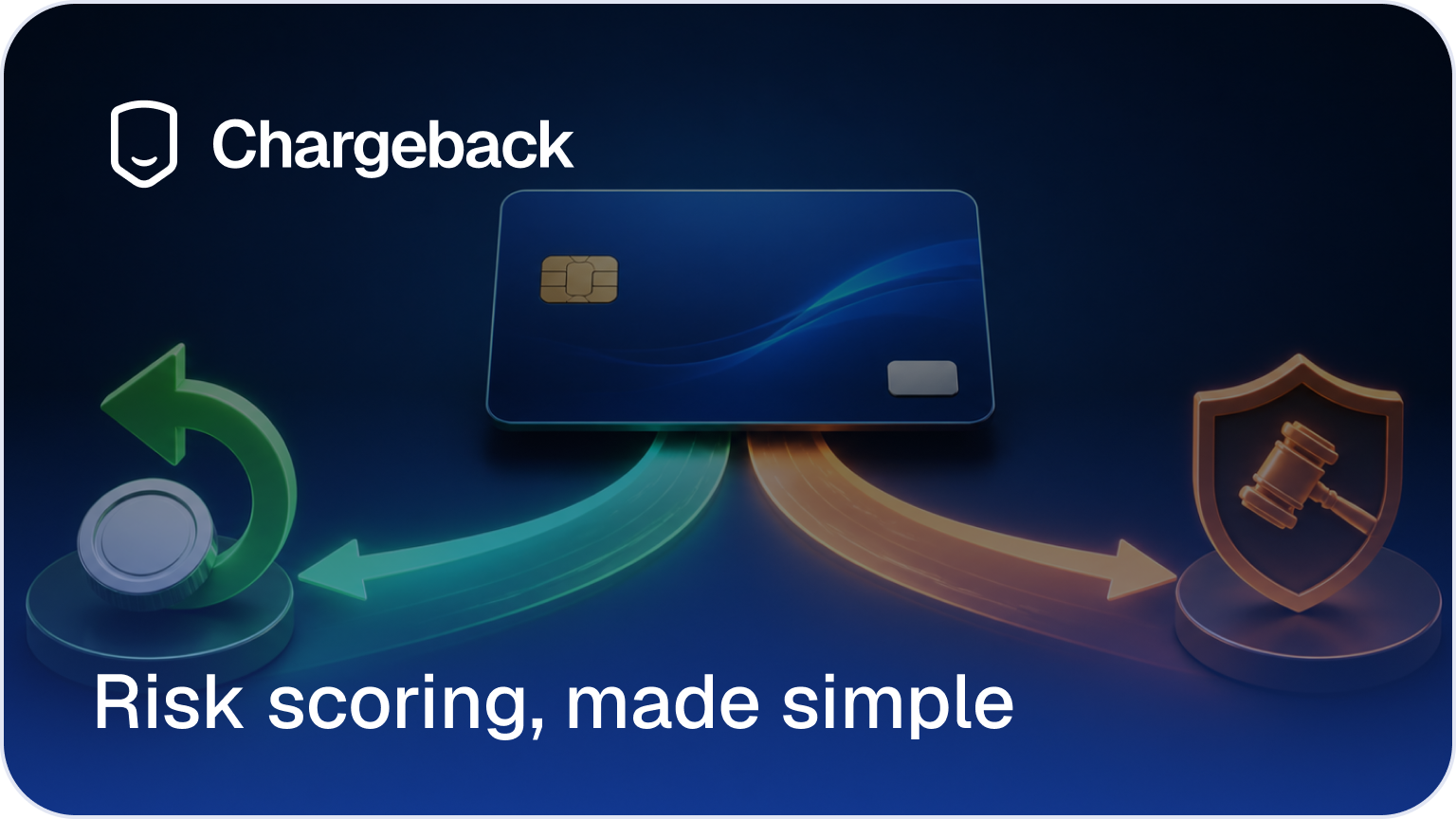
What is risk scoring?
Risk scoring ranks transactions or accounts by predicted risk, giving merchants a practical basis for review urgency and fraud or dispute controls.
Chargeback.io vs Riskified: different jobs, not rivals
Riskified decides whether to approve an order at checkout, while Chargeback.io prevents reported disputes from becoming chargebacks, so a merchant can use both at different stages.
What Is a BIN Attack?
A BIN attack uses a known card-number range to test generated payment details, and merchants can spot it through rapid low-value attempts and stop it with velocity, CVV, AVS, and bot controls.
What Is a Card Network?
A card network sets the rules that connect banks, processors, and merchants, including the reason codes, evidence requirements, and deadlines that govern disputes.

What Is Representment?
Representment is the re-submission of a returned card or ACH payment, and the exact process, deadline, and outcome depend on the payment rail.
What Is a Payment Gateway? How It Works
A payment gateway securely passes checkout payment details for authorization, and its integration type and fraud controls determine your PCI scope and early dispute exposure.

Best Payment Orchestration Platforms Compared
Payment orchestration platforms route payments across processors, and the comparison shows how volume, routing depth, dispute capabilities, and risk appetite determine the fit.
Best Payment Gateways by Use Case: Ecommerce, SaaS, High-Risk
Payment gateway choice should start with merchant use case, category acceptance, processing rates, and dispute fees so ecommerce, SaaS, recurring, high-risk, and nonprofit businesses can compare realistic options.

Wardrobing: What It Is and How It's Different From Bracketing
Wardrobing is a return scam in which a shopper uses an item then claims it is unused, distinguished from bracketing by intent and from return fraud by the false condition claim.

Gift Card Draining: How It Works and Who Owns the Chargeback
Gift card draining lets thieves access and spend a card balance before its legitimate owner does, leaving the merchant to absorb the fraud dispute and manage redemption risk.
What Is a Provisional Credit?
A provisional credit is a reversible refund a bank posts while a dispute is open, making the processor's response deadline the merchant’s practical deadline.

Kount Alternatives (2026): Compared by Price and Fit
Kount alternatives differ most by price transparency, transaction volume, and chargeback guarantees, while alerts remain necessary after an order has been approved.
PayPal Pre-Chargeback Alert: How to Respond in Time
A PayPal pre-chargeback alert gives merchants 20 hours to refund or submit evidence, so the order value relative to the $20 fee determines the response.
Agentic Payments and Chargebacks: A Merchant Guide
Agentic payments create chargebacks under existing reason codes, while the still-unsolved merchant need is evidence of the customer's mandate to the agent.
Mastercard First-Party Trust: How It Works vs. CE3.0
Mastercard First-Party Trust shifts liability to the issuer when device, delivery, and identity data match, unlike CE3.0's prior-purchase requirement.

Account Takeover Prevention: Methods That Work
Account takeover prevention works best when merchants protect login, account changes, and checkout together, then refund likely takeover orders before fulfillment.

Ecommerce Fraud Statistics: What the Numbers Mean for Your Store
Ecommerce fraud costs are rising sharply, and the most useful merchant benchmark is the reason-code mix showing where disputes begin.
Return Fraud: What It Is, the Types, and Is It a Crime
Return fraud is deception about a returned item, distinct from policy abuse, and merchants can prevent it by tying every claim to transaction records.
Gift Card Fraud: How It Becomes a Chargeback You Can't Win
Gift card fraud turns into a hard-to-win chargeback when a stolen card funds instantly delivered value, so prevention must happen before redemption.
What Is First-Party Misuse?
First-party misuse is the current industry term for a cardholder disputing a charge they authorized, with a practical test for separating confusion from deliberate fraud.
5 Best Chargeblast Alternatives, Compared (2026)
Chargeblast sells pre-dispute alerts, so Chargeback.io is its closest like-for-like swap, while Chargeflow, Chargebacks911, and Chargeback Gurus all work on chargebacks that have already filed and solve a different problem.
What Are Subscription Chargebacks?
A subscription chargeback is a dispute filed against a recurring charge under an ordinary reason code like Visa 13.2, usually because the customer says they cancelled, forgot the subscription existed, or didn't recognize the charge, making billing clarity rather than fraud screening the fix.
What Is Payment Orchestration?
Payment orchestration is a software layer that connects a merchant's checkout to multiple payment processors and routes each transaction to the best one in real time based on cost, approval rate, currency, and uptime, though the fee only pays off once a store runs high enough volume across a second processor.
What is synthetic identity fraud?
Synthetic identity fraud combines a real person's stolen Social Security number with fabricated details to build a credit identity that belongs to nobody, which incubates for months of on-time payments before the fraudster maxes every credit line and disappears.
What is triangulation fraud?
Triangulation fraud is a three-party scheme where a fake seller collects a real buyer's payment, then fulfills that order using a stolen card at a legitimate retailer, leaving the retailer to absorb the loss since the goods have already shipped by the time the true cardholder disputes the charge.
What is velocity checking?
Velocity checking is a fraud control that flags or blocks payments or logins once the same card, account, device, or IP crosses a preset count in a set time window, catching automated card-testing bursts while missing a patient fraudster who slows down to stay under the limit.
What Is Zero Liability Protection?
Zero liability protection is the Visa and Mastercard policy that caps a cardholder's loss on unauthorized charges at $0, leaving the fraud loss and the burden of proof on the merchant while excluding commercial cards and unregistered prepaid cards.
Soft Decline vs. Hard Decline: What's the Difference?
A soft decline is a temporary rejection that can often be fixed and retried, while a hard decline is a permanent bank-side refusal that needs a different card, and poor handling of either can turn into friendly fraud weeks later.
What Is Regulation Z?
Regulation Z implements the Truth in Lending Act and gives credit card holders the right to dispute billing errors, with issuers required to acknowledge within 30 days and resolve within 90, covering seven defined error categories that don't include simple quality complaints.
What Is Regulation E?
Regulation E is the federal rule implementing the Electronic Fund Transfer Act, giving consumers dispute rights and capped liability on unauthorized debit, ACH, and P2P transfers, with a bank decision required in 10 business days (or 45 with a provisional credit).
Chargeback.io vs Chargeflow: which one to pick
Chargeback.io and Chargeflow resell the same Ethoca and Verifi alert networks, so coverage is identical; the real differences are price, support, dashboard focus, and how fast you can enroll.
Payment Gateway vs. Payment Processor: The Difference
A payment gateway captures and encrypts card data at checkout while a payment processor moves the money to the card networks and banks, and it's the processor, not the gateway, that handles a chargeback.
What Is a Payment Facilitator (PayFac)?
A payment facilitator lets other businesses accept card payments under its own master merchant account, and when a sub-merchant can't cover a chargeback, the payment facilitator ends up paying it.
What Is a Merchant Category Code (MCC)?
A merchant category code (MCC) is a four-digit number assigned by a merchant's acquirer that classifies the business by what it sells, and it sets both the interchange rate the merchant pays and the baseline dispute threshold card networks judge them against.
What is a negative database?
A negative database is a merchant's own record of card numbers, emails, addresses, and other identifiers tied to past fraud or chargebacks, checked against every new order, but it only catches repeat bad actors who reuse an identifier already on the merchant's own list.
What Are Interchange Fees?
An interchange fee is what a merchant's acquiring bank pays the customer's card-issuing bank on every card sale, typically 1.41% to 2.7% in the US, and it's the cost merchants never recover even when they win a chargeback dispute.
What Is an Independent Sales Organization (ISO)?
An independent sales organization (ISO) is a third-party company that sells and manages merchant accounts on behalf of an acquiring bank, never holding funds or processing transactions itself, so the sponsoring bank carries the risk and reserve terms for every account the ISO signs.
What is a fraud score?
A fraud score is a number or risk category that a payment processor or fraud tool assigns to a transaction at checkout to estimate its likelihood of being fraudulent, routing it to approve, block, or manual review based on where it falls against a threshold.

What is device fingerprinting?
Device fingerprinting is a fraud-detection method that identifies a device by combining its hardware, software, and network traits into one identifier, useful for chargeback prevention but only as one input among several since it can't confirm the person holding a recognized device is authorized to use the card.
What Are Credit Card Decline Codes?
A credit card decline code is the short code an issuer or network returns at authorization to explain why a charge failed, and the guide covers the most common codes across Visa, Mastercard, Amex, and Discover plus what to do about each.

What Is Compelling Evidence in a Chargeback Dispute?
Compelling evidence is the documentation, proof of delivery, match data, customer messages, or accepted policies, that a merchant submits to prove a disputed transaction was legitimate, and what counts (and whether it's a named program) differs by card network.
What Is the Chargeback Statute of Limitations?
Chargeback statute of limitations" actually names three separate deadlines: the card network's roughly 120-day cardholder filing window, the federal 60-day billing-error notice window, and a state's 3-to-6-year civil suit deadline.
What Is Batch Settlement?
Batch settlement is the process of closing a group of authorized card transactions and submitting them together for funding, typically landing in merchant accounts 1-3 business days after the batch closes.
What Is an Authorization Hold?
An authorization hold is a temporary reservation of funds a processor places on a card to confirm funds are available, typically releasing in 1-5 business days (up to 30 for hotels and car rentals) before it either captures or expires.
Acquiring Bank vs. Issuing Bank: What's the Difference?
An acquiring bank processes a merchant's card payments while an issuing bank issues the cardholder's card and authorizes the purchase, and only the acquiring bank can fight a chargeback for the merchant.
What Is Account Updater?
Account updater is a card-network service (Visa and Mastercard) that automatically refreshes stored card numbers and expiration dates so recurring charges don't fail on stale cards and turn into cancelled-recurring disputes.
What is account takeover fraud?
Account takeover fraud is unauthorized access to a real customer's account used to buy goods or steal stored payment data, and it files as true fraud (much harder for a merchant to fight) rather than friendly fraud.
.jpg)
Recurring Billing Disputes vs. One-Time Chargebacks
A recurring-billing dispute files under a dedicated canceled-recurring reason code and needs signup/cancellation records, while a one-time chargeback files under a fraud or delivery code and needs proof of purchase or delivery.
.jpg)
How Chargebacks Cause Involuntary Churn
A chargeback can cancel a subscription even after the renewal charge succeeds, because billing platforms read the reversal as a payment failure, and Visa reason code 13.2 alone accounts for 8.5% of coded alerts on canceled recurring disputes.
What Happens When You Respond to a Shopify Chargeback
Shopify shows a fixed due date on each disputed order (typically 7 to 21 days after filing), and matching your evidence to the exact dispute type Shopify assigns is what decides whether the response wins.

Chargeback Management Companies: The 3 Types
Chargeback management companies split into three categories, in-house tooling, outsourced services, and software-only platforms, and confirming pricing model, real integrations, win-rate base, and contract terms before signing is what separates a genuine fit from a homepage label.
Why Refunds Alone Don’t Replace Chargeback Alerts
A refund doesn’t always prevent a chargeback. If the cardholder disputes the transaction first, you can refund the order and still get hit with a chargeback.
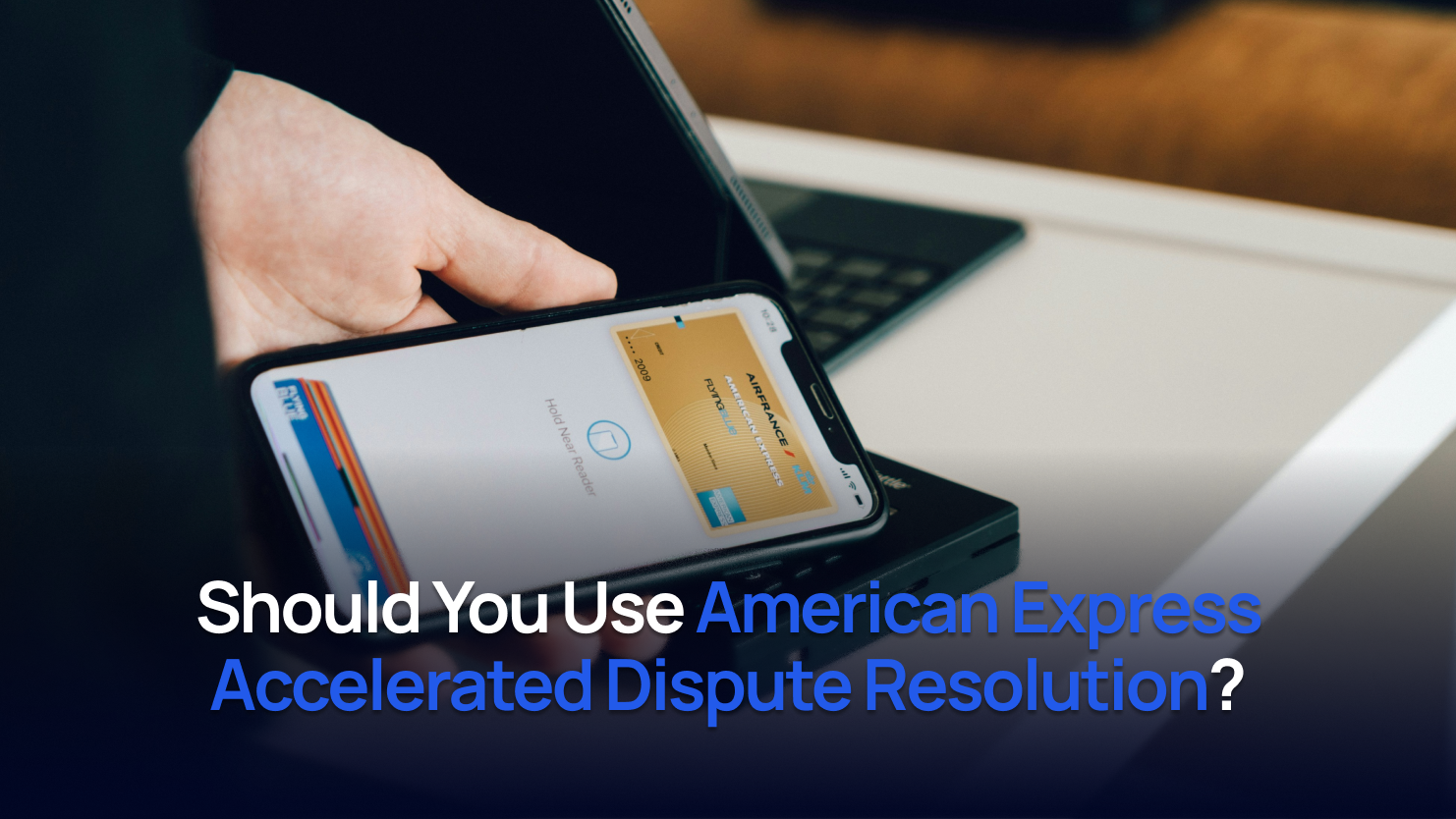
Should You Use American Express Accelerated Dispute Resolution?
American Express Accelerated Dispute Resolution (ADR) is a pre-dispute alert that helps prevent some disputes from escalating into chargebacks. Merchants have up to 8 days to respond to an eligible dispute and resolve. If not resolved, the issue moves deeper into the disputes process.
.png)
Why Partnering With a Chargeback Prevention Provider Matters
A chargeback prevention provider is worth partnering with only if it passes the accountability test: a written chargeback guarantee, an approval-rate SLA, and a named payer for losses on approved orders that still dispute.

The Ultimate Guide to Visa Compelling Evidence 3.0 (CE3.0)
Visa Compelling Evidence 3.0 (CE3.0) lets merchants shift fraud-dispute liability back to the issuer by matching data from a cardholder's prior undisputed purchases, and since October 17, 2025, Visa Secure and Data Only transactions can qualify automatically with no submission required.
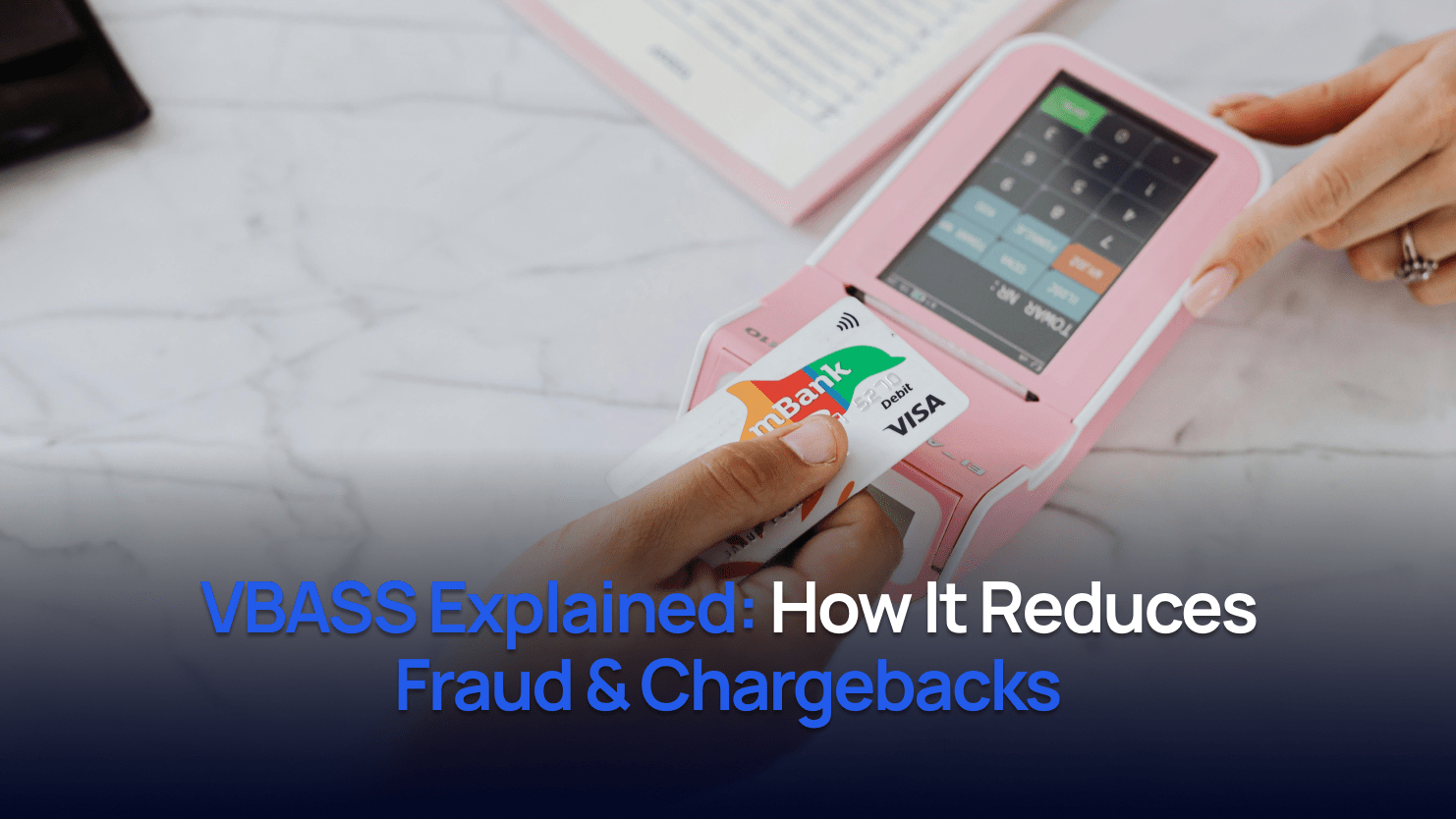
VBASS Explained: How It Reduces Fraud & Chargebacks
Visa BIN Attribute Sharing Service (VBASS) is a paid Visa program that shares BIN-level risk data across three access tiers so merchants can screen a transaction before authorization, complementing (not replacing) post-authorization chargeback alerts.

9+ Best Ways Subscription Businesses Can Reduce Chargebacks
Want to lower chargebacks for your subscription business? This guide will walk you through simple changes that can help.
.png)
How to Streamline Refund Processes to Avoid Chargebacks
A fast, visible refund workflow gives customers a clear alternative to filing a chargeback and shows merchants where delays create disputes.

Stripe Chargeback Protection: What It Actually Covers
Stripe Chargeback Protection automatically reimburses fraud and card-not-present disputes on Stripe Checkout charges for a 0.4% fee, capped at $25,000 a year, while cancellation and delivery disputes stay uncovered.
.png)
Visa Acquirer Monitoring Program (VAMP): Full Guide
The Visa Acquirer Monitoring Program (VAMP) is Visa's single fraud-and-dispute ratio, replacing VDMP and VFMP, with a 2.2% merchant threshold dropping to 1.5% on April 1, 2026, and disputes resolved via a pre-dispute alert never count toward it.

Refund Abuse: What It Is, the 7 Types, and How to Stop It
Refund abuse is a customer exploiting a merchant's return policy to get money or goods they haven't earned, splitting into 7 recognizable patterns (from item-not-received claims to organized fraud rings), and it cost US retailers an estimated $103 billion in 2024, or about 15% of all merchandise returns.

PCI DSS Compliance: What Merchants Need to Know
PCI DSS is a set of rules designed to protect payment card data. Keep reading to learn about its requirements, costs, and more.

CVV Numbers: How They Tie Into Chargeback Prevention
CVVs are 3- or 4-digit codes on payment cards that verify the cardholder's legitimacy. Keep reading to learn about the magic behind them.

How GDPR Impacts Chargeback Handling in the EU
GDPR limits which customer data can go into a chargeback dispute response, requires a lawful basis for using it, and caps how long you can retain it, with retention windows running up to 540 days for slow-delivery disputes.

Credit Card Encryption vs. Tokenization: Which Is Safer?
Tokenization replaces card data with a non-sensitive reference while encryption makes it unreadable but reversible, making tokenization the safer default for most merchant systems.

What Is Credit Card Encryption?
Credit card encryption scrambles payment card data into unreadable ciphertext in transit using AES, RSA, or Triple DES, and whether it's PCI-validated P2PE or general-purpose E2EE determines how much of a PCI DSS audit it covers.

How Does Payment Tokenization Work?
Tokenization replaces sensitive card data with unique tokens that hackers can’t decode. Curious? Let’s explore how it works and why it’s a smart choice for businesses.

Crypto Payment Chargebacks: What Merchants Should Know
Customers can’t file chargebacks for purchases done with cryptocurrency. Why is that? And should you use crypto for your business? Read on to find those answers and more.

How to Block a Customer on Shopify (and When It Works)
Shopify has no native "block customer" button, so stopping a repeat customer means disabling their account, requiring login before checkout, adding a third-party blacklist app, or automating the response with Shopify Flow, though blocking only catches identities you've already flagged and misses the nearly 90% of successful disputers who try again.

What Is a High-Risk Merchant Account?
A high-risk merchant account accepts cards for businesses with elevated dispute or fraud exposure, usually with higher fees, reserves, and stricter underwriting.

What Is Address Verification (AVS)? Codes and Limits
Address Verification Service (AVS) compares the billing address entered at checkout against the card issuer's records, returning a match, partial match, no-match, or unavailable code, and it only catches address-based fraud, not stolen cards carrying the real billing address.

Chargeback Management Outsourcing: In-House or Hybrid?
In-house chargeback management works well for small businesses with lower budgets. Outsourcing works better for larger businesses or those in high-risk industries.

Stripe Closed, Suspended, or Froze My Account: What to Do
Stripe usually closes, suspends, or freezes accounts for an excessive dispute rate, suspicious activity, a restricted-business violation, or a compliance gap, and typically holds remaining funds for up to 180 days after closure.

Reasons Chargebacks Get Denied and What to Do Next
Chargebacks get denied when the claim, evidence, or filing window fails the network's rules, and the next step depends on whether the gap can still be corrected or escalated.

What Is a Merchant ID? Definition, Format, Chargeback Risk
A merchant ID (MID) is a unique number that helps route payments to the right merchant account. It ensures smooth communication between all parties in a transaction. Keep reading to learn why they’re critical for doing business.
Disminuya su tasa de disputas hoy
Únase a más de 800 empresas que utilizan Chargeback para evitar las devoluciones de cargo automáticamente; la configuración lleva menos de 2 minutos.