What Is a High-Risk Merchant Account?


A high-risk merchant account is a payment processing account for a business. A processor sees it as more likely to generate chargebacks, fraud, or regulatory trouble than average. Processors base the label on a business's industry, chargeback rate, model, or transaction profile. It comes with higher fees, rolling reserves, and stricter contract terms.
I've helped merchants fix that rate before they ever touched a dispute. They fixed the descriptor and set up alerts. The cheapest chargeback is the one the customer never files.
This article covers what triggers the label and what it costs. It also covers the one lever you fully control to get out of it.
Key takeaways
What is a high-risk merchant account?
A high-risk merchant account still processes your payments. But it runs on terms built for a business a processor expects more trouble from. That trouble means chargebacks, fraud, or compliance issues.
The label rests on industry, chargeback rate, business model, or geography. It means higher fees, a rolling reserve, and a contract a processor can end faster than a standard one.
Visa and Mastercard underwrite the risk. They watch a merchant's dispute activity against fixed thresholds. Cross one of those thresholds, and the network pushes the merchant into a formal chargeback monitoring program. That's a real review process, not an informal label.
A business can land in high-risk territory by industry alone. Adult content, CBD, and gambling merchants get the label even with a clean dispute history.
A low-risk industry business can still get flagged if its own chargeback rate crosses a threshold. The label can follow a merchant's own numbers, or it can follow the category it sells in.
The account itself isn't defective. A high-risk merchant account runs on the same card networks and the same currencies. It uses the same checkout flow as a standard account too.
What changes is the underwriting. The processor charges more to hold the risk. It also keeps more room to walk away if that risk gets worse.
Reasons you may be considered high-risk
Five factors decide a high-risk label, split between what your business is and what it does. The sections below cover each one, starting with the factor most merchants ask about first.
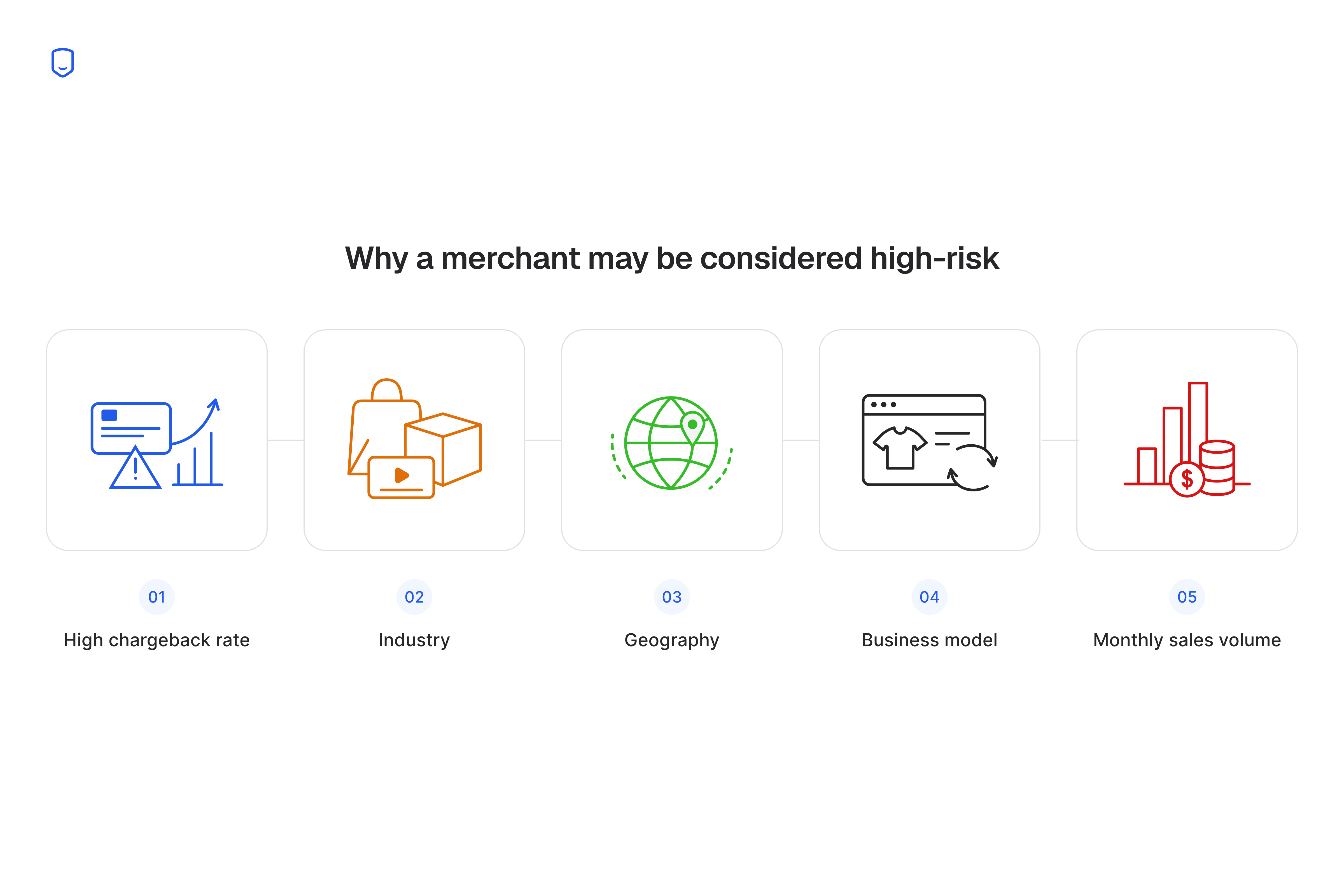
1. High chargeback rate
A chargeback rate that crosses a monitoring-program threshold is a frequent reason for reclassification. A standard account can become high-risk this way. Visa and Mastercard each run their own chargeback monitoring program.
Visa calls its version VAMP. Mastercard calls its ECM and HECM. Both count a merchant's disputes against its transaction volume every month. Crossing the entry threshold triggers a mandatory review. Processors often reclassify a merchant as high-risk before that review even finishes.
A merchant doesn't need high volume to trip this. The chargeback rate that matters is a ratio. It's disputes divided by settled transactions. A small store with a handful of disputes can cross the exact threshold.
A much bigger store would need hundreds of disputes to reach that same threshold. Volume doesn't protect a small business from the math.
A merchant who checks that ratio only once a quarter can miss something important.
A bad batch of orders can push the rate over the line in a single month. Networks measure the threshold monthly. A spike gets averaged away by the next quarter. But it still counted against the merchant in the month it happened.
2. Industry
Certain industries get classified high-risk by default, no matter how clean a merchant's own record is. Adult content, CBD, gambling, subscription billing, and travel top the list.
Card networks track chargeback and fraud data by industry, using merchant category codes. A new merchant inherits its category's track record before it builds one of its own.
A merchant in a flagged industry with a strong dispute record can still negotiate better terms than the category default. It rarely escapes the high-risk label entirely. The underwriting decision is about the category's history, not just this one merchant's file.
That distinction matters when you're shopping for a processor. A generalist that approves your application today may still classify you as high-risk on paper. Your own dispute record can look clean, but your merchant category code carries the flag by default regardless.
3. Geography
Selling mostly to customers abroad raises risk on its own. So does running the business from a country processors flag as riskier. Fraud tools and address checks work less well outside their home markets. So cross-border sales carry more fraud and more disputes.
Processors price these merchants with extra care as a result.
A domestic-only business can still get flagged high-risk on industry or chargeback-rate grounds. This can happen even with zero cross-border exposure. Geography is one trigger among several.
A merchant expanding into new markets should expect scrutiny to rise with the share of international sales.
Total volume matters less. A store with a small slice of cross-border orders rarely draws attention on geography alone. A store where most sales are international usually draws that attention. It can happen even before any dispute pattern shows up.
4. Business model
Recurring billing and continuity models get flagged high-risk more often than one-time-purchase models. Subscriptions and auto-renewal are the main examples. Customers forget what they signed up for and dispute instead of canceling.
A subscription charge can look unfamiliar on a statement. Maybe the billing descriptor is unclear. Maybe it's a renewal months after signup. Either way, it reads as unauthorized to the cardholder.
That turns a simple cancellation into friendly fraud.
A one-time-purchase business can trigger the same dynamic with a confusing billing descriptor. The risk comes from billing clarity as much as from the subscription model itself.
Free-trial-to-paid conversions carry their own version of this problem. A customer who forgets to cancel before the trial ends sees a surprise charge. They opted in weeks earlier, but disputing still feels more natural than digging up an old signup email.
5. Monthly sales volume
High monthly transaction volume or a high average ticket size increases a processor's dollar exposure per dispute. That exposure pushes some merchants into high-risk underwriting even with a clean dispute record.
A processor's liability in a dispute is the transaction amount.
Take a merchant selling $2,000 items. It carries more risk per dispute than one selling $20 items at the same dispute rate. A bigger ticket size makes that same rate cost the processor more.
A high-ticket merchant can still negotiate standard terms if its dispute rate is unusually low. Underwriting weighs volume and rate together.
The same logic runs in reverse for a merchant scaling up fast. A store that doubles its monthly volume in a short window can look riskier to a processor. That's true even at the same dispute rate. The processor's total dollar exposure to that merchant just doubled too.
What should I expect with a high-risk merchant account?
A high-risk merchant account carries three costs a standard account doesn't. It also carries a termination risk worth understanding before you sign. Those costs are higher per-transaction fees, a rolling reserve, and a contract that allows faster termination.
A rolling reserve holds back a share of revenue. Each cost offsets a specific risk the processor takes on.
The extra fees cover the chargeback losses the processor expects. The reserve builds a cash buffer for a dispute spike. The shorter termination clause limits the processor's exposure to a merchant whose risk changes.
A rolling reserve usually releases, in full or on a schedule, after a set period with no disputes. The extra cost isn't necessarily permanent, even while the high-risk classification is.
A processor that ends a contract early can also list the merchant on Mastercard's MATCH list. This applies if the termination reason qualifies. A MATCH listing makes getting a new merchant account far harder.
The acquiring bank behind your gateway decides whether to take on a high-risk merchant at all. The gateway itself only routes the transaction.
That's why a merchant shopping for a "high-risk gateway" is usually asking the wrong question. The gateway is often the same product a standard merchant uses. The acquiring relationship behind it sets the fee premium, the reserve, and the contract terms.
What to do if you're a high-risk merchant
A merchant already classified high-risk has two paths. One is to apply with a high-risk-friendly processor now. The other is to work on lowering the chargeback rate that keeps the classification in place. Only the second path can change the underwriting decision itself.
Lowering the chargeback rate below a network's threshold is the one lever a merchant fully controls. The merchant also has to hold it there through the review period. Two moves carry the most weight.
Fixing an unclear billing descriptor helps cardholders recognize the charge instead of disputing it. Enrolling in dispute alerts (Ethoca, RDR, and CDRN) does the other job. It resolves a dispute before it counts against the threshold at all.
On my own stores, the descriptor fix was the bigger lever of the two. A charge nobody recognizes on their statement is a chargeback waiting to happen. That's true no matter how good the alert coverage is.
This lever doesn't work for industry-based high-risk classification. A clean chargeback rate removes only a behavior-level flag. The category-level flag on an adult, CBD, or gambling business stays in place.
Our alert data shows where most disputes originate before they become chargebacks.
Our chargeback prevention approach catches those disputes at the alert stage, before they count against a threshold.
Run your own numbers through our ROI calculator to see how much a lower rate could save you.
High-risk merchant processors to consider
Six processors specialize in high-risk underwriting. Each brings a different strength, so match your classification trigger to the right fit first:
The right fit depends on which classification trigger applies to you. An industry-specific provider fits an industry-based flag. An offshore-capable provider fits a geography-based flag.
Rolling-reserve and contract terms vary more between these providers than the headline approval promise does. Fee transparency varies too. A few providers don't publish full rates, which matters when you compare the real cost of an account. Each provider's spec table below carries what is public.
1. Payment Cloud: best for fast, broad approval
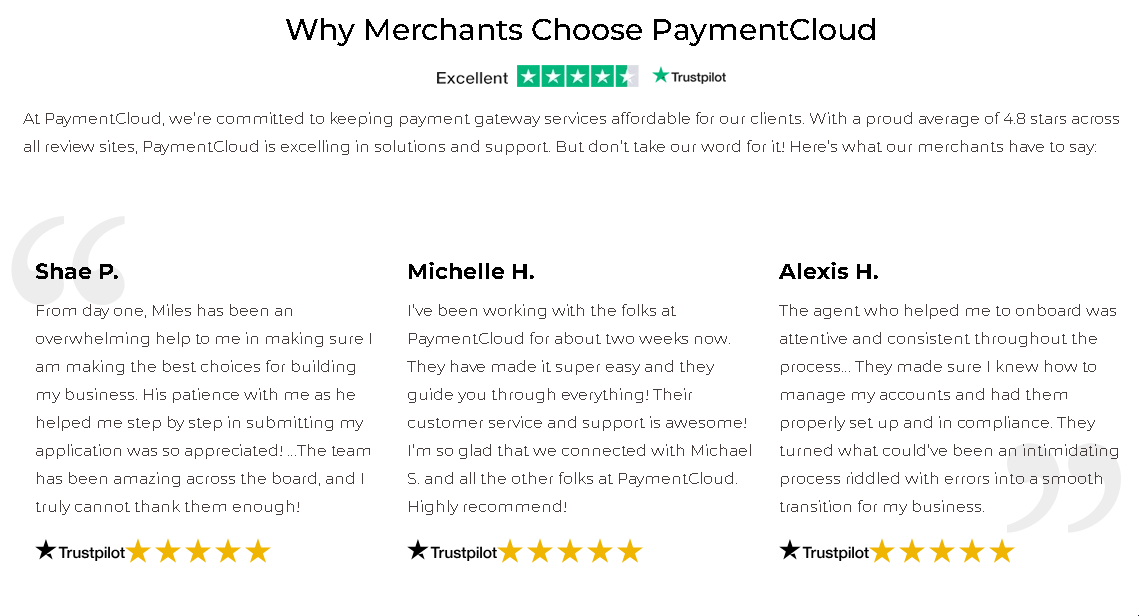
- 98% approval rate, built to approve accounts other processors decline
- Monthly fees typically $10 to $50, rates around 3.49% to 3.95% plus $0.25 per transaction, per PaymentCloud's fee guide
- Works across all legal high-risk industries, a fit when your trigger is unclear
- Integrates with Shopify and WooCommerce, so a store switches without rebuilding checkout
- Watch for: the full fee schedule isn't published up front and varies by merchant
Payment Cloud makes sense as a first stop when the trigger is unclear, or when more than one applies. That breadth can mean less specialized underwriting than a niche provider gives. Compare a specialist's quote once you know your exact trigger.
2. SensaPay: best for adult-industry merchants
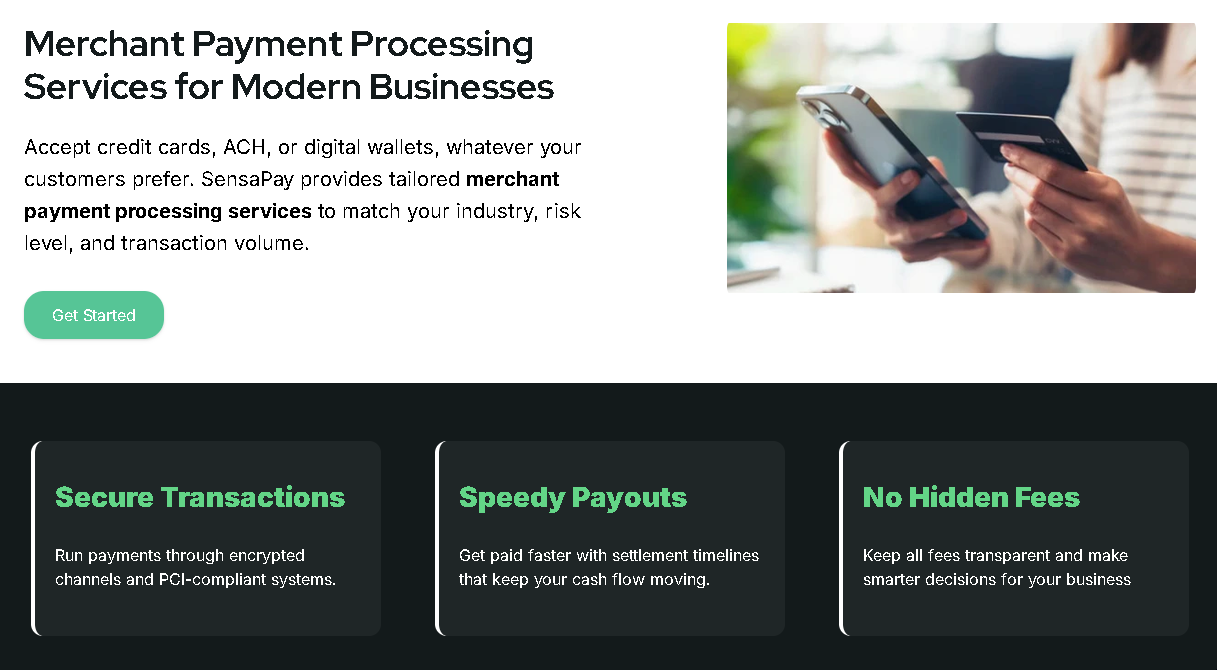
- Specializes in adult-content billing, which most mainstream processors won't touch
- Rates typically 2.5% to 5%, monthly fees around $25 to $75, per SensaPay's own fee breakdown
- Covers adult e-commerce, live cam, adult dating, and social platforms
- Full feature set: recurring billing, smart retries, 3D Secure, chargeback management, and a customer vault
- Integrates with Shopify, WooCommerce, BigCommerce, Authorize.net, Chargebee, and Recurly
SensaPay is built for merchants who keep getting declined, frozen, or banned elsewhere. If your business is one of them, a specialist usually prices the risk more fairly.
A generalist sees few adult-content merchants, so it guesses at how a new one will perform. A specialist has underwritten enough similar accounts to price against real data. For a merchant with a clean record, that often means better terms.
3. Durango Merchant Services: best for offshore
- Offshore acquiring network, with options a home-market processor lacks
- Processes cryptocurrency payments, an edge for customers outside standard card rails
- Dedicated account managers and flexible fee structures
- Covers travel, fantasy sports, supplements, and international sellers
- Watch for: fees aren't published online, so a quote is the first step
That offshore reach matters most when your customers sit mostly outside your home country. It also fits a business run from a jurisdiction a domestic processor won't underwrite. A geography flag points here first, ahead of an industry or rate flag.
4. Host Merchant Services and Bankful: best for mid-market
Both providers serve mid-market high-risk merchants who want hands-on account management and no long-term contract lock-in. They fit a business that has outgrown the smallest merchant tier but still carries a high-risk flag.
At this stage you care more about a responsive account rep during a dispute spike than about fast signup. That's the tradeoff these two make against the faster-approval processors.
Host Merchant Services

- $14.99 monthly fee, published on its pricing page
- Interchange-plus e-commerce markup of 0.35% plus $0.10 per transaction, per the same source
- Covers travel, gambling, adult novelties, and debt recovery
- Watch for: high-risk pricing runs through a partner processor and isn't published for every industry, so a quote is the next step
Bankful
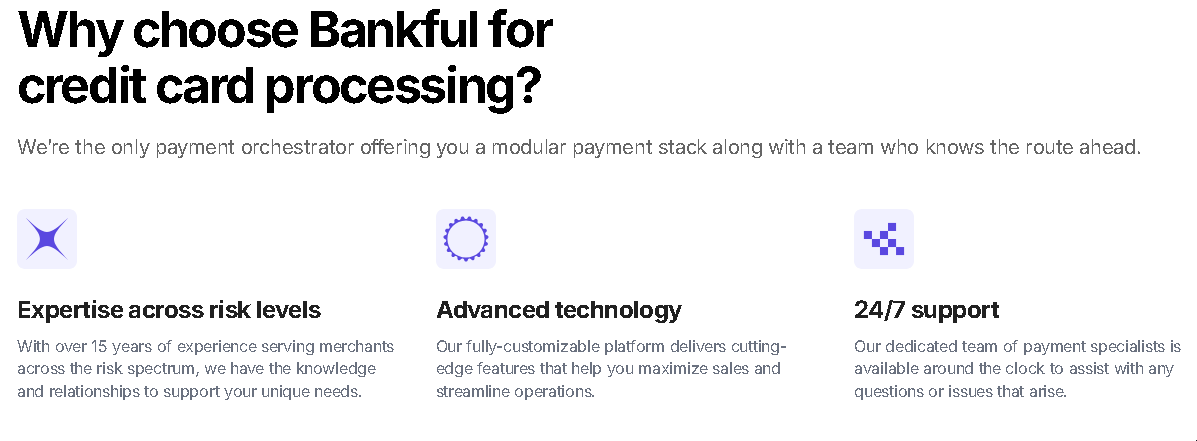
- $0 to $95/mo tiers, rates from 0.60% plus 10 cents on the Success plan, per Bankful's pricing page
- Supports crypto payments and buy-now-pay-later alongside card processing
- Covers travel, BNPL, smoking accessories, and subscriptions
- Watch for: the top Plus tier charges per chargeback alert, so heavy dispute volume gets expensive fast
5. Authorize.net: best for global checkout
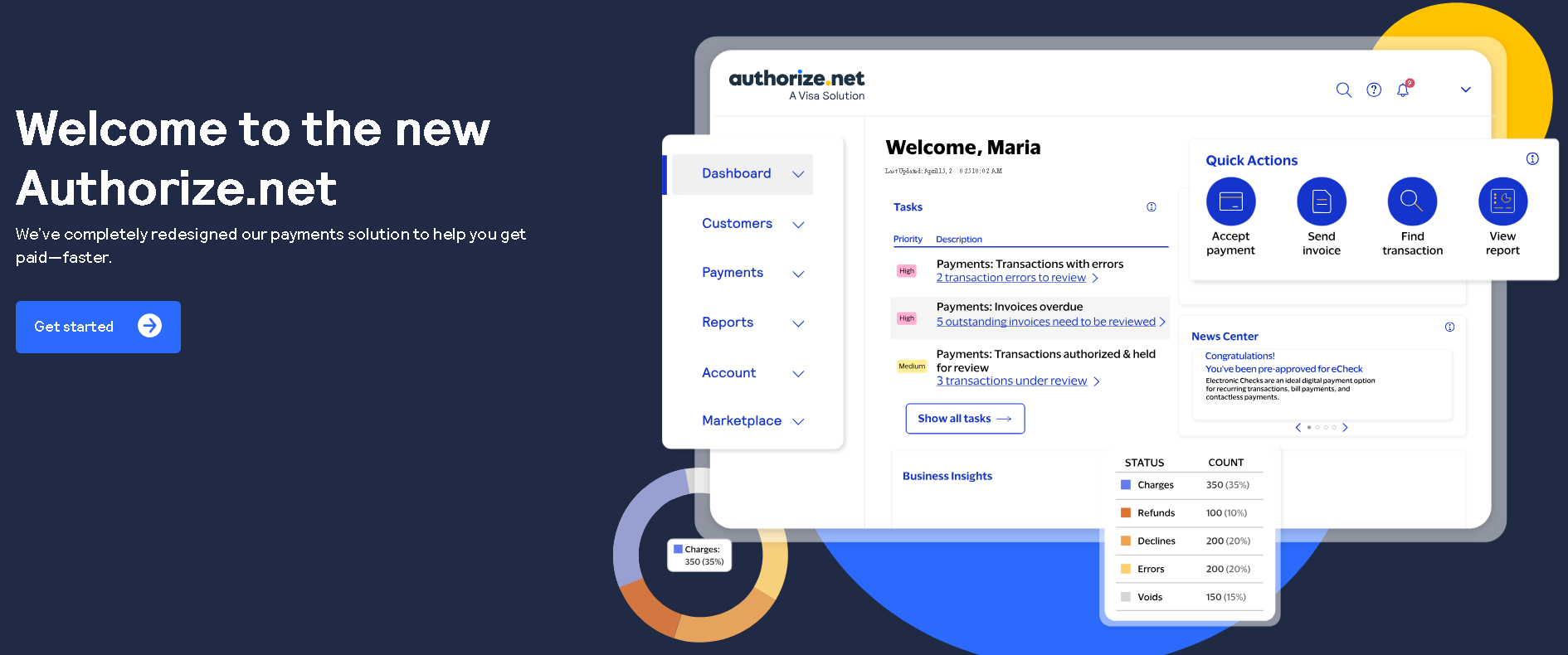
- Payment gateway that pairs with a high-risk-friendly acquirer behind the scenes
- $25/mo, rates from 2.9% plus 30 cents, $0 early termination, per Authorize.net's published pricing
- Supports PayPal, Apple Pay, and international payments for merchants selling across borders
- Covers CBD, legal smoking accessories, and other legal industries
- Watch for: you still need a separate acquiring relationship that accepts your risk
Authorize.net fits a merchant who already has a high-risk acquiring bank, or can arrange one, and just needs a reliable gateway. It's a poor fit for anyone expecting one signup to solve both the gateway and the acquiring problem.
FAQ
High-risk vs. standard merchant account: what's different?
A standard account gets priced for typical risk. A high-risk account gets priced for above-average expected loss, the whole cost difference this article covers.
Can a high-risk merchant account help prevent chargebacks?
The account type only prices in chargeback risk, through fees and reserves. Stopping chargebacks takes separate tools, like descriptor fixes and dispute alerts.
Is high-risk merchant account status permanent?
It depends on the trigger. Chargeback-rate-based status can change, but industry-based status almost never does.
Do occasional sellers need a high-risk merchant account?
An occasional or seasonal seller is judged on the same five triggers as a full-time business. Low volume doesn't exempt a merchant if the dispute ratio is high or the industry is flagged by default.