Chargeback blog
Our blog teaches you everything you need to know about chargebacks and the payment industry. As well as some case studies from us.
What Is a Merchant Account? How It Works, What It Costs, and What Puts It at Risk
A merchant account temporarily receives settled card funds, and its pricing, underwriting, and exposure to reserves or closure depend heavily on a merchant's dispute ratio.

Chargeback Arbitration: Costs and When to File
Chargeback arbitration is the binding final dispute stage, and its network-specific fees, filing windows, and expected recovery determine when an acquirer should file.

What Is Promo Abuse? How It Becomes a Chargeback
Promo abuse repeats or circumvents an offer and can later become a fraud or recurring-billing dispute, so identity checks, redemption limits, notices, and evidence records matter.
Adyen Chargebacks: Fees, Reason Codes, and Second Chargebacks Explained
Adyen chargebacks follow the card networks' reason codes and defense process, with fees, deadlines, second chargebacks, and arbitration determining whether a case is worth fighting.

What Is an ARN Number?
An acquirer reference number is the 23-digit identifier banks use to trace a card payment or refund, and it differs from a STAN, RRN, and merchant transaction ID.
Chargeback.io vs Signifyd: how they differ
Signifyd screens and guarantees orders at checkout, while Chargeback.io resolves reported disputes before they post, so their effect on revenue and chargeback ratio is different.
Chargeback Management Companies: The 3 Types
Chargeback management companies split into three categories, in-house tooling, outsourced services, and software-only platforms, and confirming pricing model, real integrations, win-rate base, and contract terms before signing is what separates a genuine fit from a homepage label.
Braintree Chargebacks: Fees, Timelines, and Prevention
Braintree chargebacks carry fees and case-specific response deadlines, so matching evidence to the reason code and fixing descriptor and prevention gaps protects both revenue and account standing.
Affiliate Fraud: What It Is and How It Becomes a Chargeback
Affiliate fraud creates false or stolen-card conversions that can surface as chargebacks, and referral, device, fulfillment, and account records supply the evidence a merchant needs.
Does Authorize.net Handle Chargebacks? Credit Card vs. eCheck
Authorize.net records payment activity but its merchant service provider handles card chargebacks, while eCheck returns follow a separate, final ACH process.
Chargeback Abuse: How to Spot It, Prove It, and Stop It
Chargeback abuse is an intentional dispute over a purchase the customer received, and merchant-side behavior evidence, cost accounting, and prevention controls determine the response.
What Is a Payment Processor? How It Works and How to Choose One
A payment processor authorizes card payments and settles funds, and a useful choice depends on the pricing model, merchant-account setup, and chargeback terms rather than the headline rate.
WooCommerce Chargebacks: Prevention and Response by Gateway
WooCommerce chargebacks are controlled by the chosen payment gateway, so the response deadline, evidence process, fee, and prevention options vary by provider.
Free Trial Chargebacks: Why Auto-Renewal Disputes Happen
Free-trial chargebacks typically begin with the first auto-renewal charge, and clear disclosure, notices, authorization evidence, and an easy cancellation path help prevent them.

BigCommerce Chargebacks: Why Your Payment Gateway Decides
BigCommerce routes each dispute through the merchant's payment gateway, making gateway-specific fees, evidence workflows, and the provider fee central to prevention and response.
ACH Fraud: How It Works and Who's Liable When It Hits
ACH fraud uses unauthorized account or routing data or compromised bank access to move money, and liability turns on whether the affected account is consumer or business and how quickly it is reported.
Card-Not-Present Fraud: What It Is and Who Pays
Card-not-present fraud occurs when stolen card details are used without the cardholder or card present, usually shifting the loss to the merchant unless authentication changes liability.

Automated Fraud: Which Types Actually Become Chargebacks
Automated fraud uses bots to launch credential stuffing, card testing, application fraud, or synthetic identity attacks, and the comparison shows which patterns become chargebacks and how to interrupt them.

Loyalty Fraud: How Stolen Points Become a Chargeback
Loyalty fraud exploits rewards accounts or points, and only card-linked losses can become merchant chargebacks, making account and redemption controls the practical defense.
Deepfake Fraud: How It Bypasses Merchant Verification
Deepfake fraud uses synthetic media to pass signup or support verification, and layered verification plus pre-dispute alerts can stop resulting transactions from becoming chargebacks.
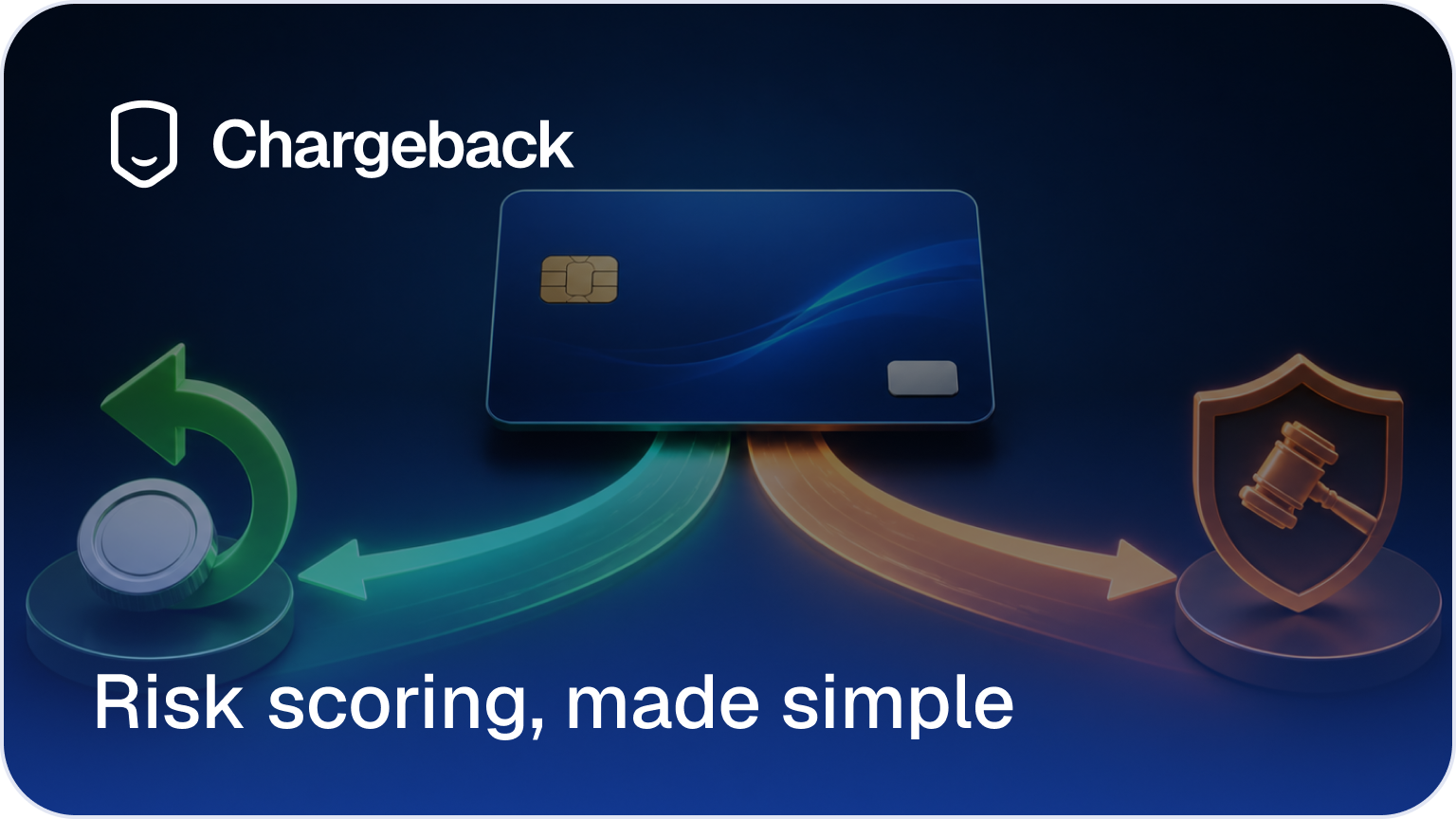
What is risk scoring?
Risk scoring ranks transactions or accounts by predicted risk, giving merchants a practical basis for review urgency and fraud or dispute controls.
Chargeback.io vs Riskified: different jobs, not rivals
Riskified decides whether to approve an order at checkout, while Chargeback.io prevents reported disputes from becoming chargebacks, so a merchant can use both at different stages.
What Is a BIN Attack?
A BIN attack uses a known card-number range to test generated payment details, and merchants can spot it through rapid low-value attempts and stop it with velocity, CVV, AVS, and bot controls.
What Is a Card Network?
A card network sets the rules that connect banks, processors, and merchants, including the reason codes, evidence requirements, and deadlines that govern disputes.

What Is Representment?
Representment is the re-submission of a returned card or ACH payment, and the exact process, deadline, and outcome depend on the payment rail.
Decrease your dispute rate today
Join 800+ businesses using Chargeback to prevent chargebacks automatically — setup takes less than 2 minutes.
