
















What Is Regulation Z?
Regulation Z implements the Truth in Lending Act and gives credit card holders the right to dispute billing errors, with issuers required to acknowledge within 30 days and resolve within 90, covering seven defined error categories that don't include simple quality complaints.
Regulation Z is the federal regulation that implements the Truth in Lending Act and gives credit card holders the right to dispute billing errors with their card issuer. The Consumer Financial Protection Bureau issues it.
A cardholder starts a dispute with a written billing-error notice, which puts the issuer on a federal deadline to investigate. Regulation Z covers open-end credit accounts like credit cards.
Why Regulation Z matters for merchants
Regulation Z binds the issuer, and the issuer’s investigation is what sends a chargeback to you. Your own filing window comes from the card network.
You only ever see the issuer’s half of it. It opens a dispute in Visa’s or Mastercard’s reason-code system, and your account gets debited.
So the debit can show up weeks after a cardholder mailed a notice you never saw.
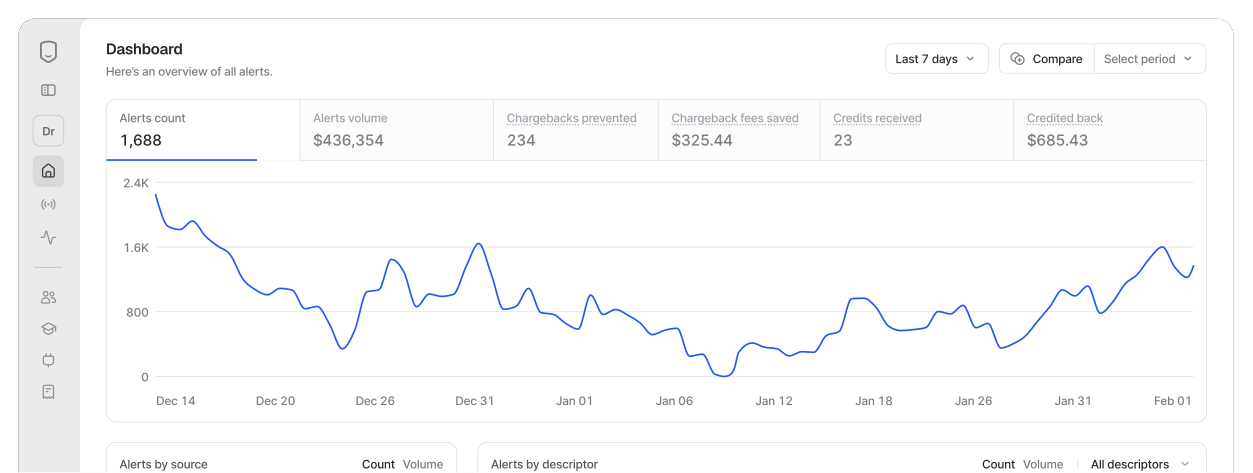
Nobody tells you the investigation is running, so watch for the alert rather than the chargeback. Ethoca (Mastercard) and Verifi (Visa) send merchants a pre-dispute notice, which is your chance to resolve the charge before it files.
Our chargeback alerts pull from both.
Regulation E covers debit cards and bank transfers. Our Regulation E entry has its deadlines and categories.
What counts as a billing error under Regulation Z
An unauthorized charge, undelivered goods, a misposted payment, or the issuer’s own math mistake all count as billing errors. Regulation Z lists seven in total, and all seven come from the CFPB’s regulatory text:
- Unauthorized charge: credit extended to someone with no authority to use the card.
- Unidentified transaction: a charge the statement fails to identify properly.
- Goods or services not delivered as agreed: property the customer never accepted or received.
- Misapplied payment: a payment or credit the issuer failed to post correctly.
- Computational error: an accounting or math mistake the issuer made.
- Clarification request: a charge the cardholder asks for documentation on.
- Missing statement: a periodic statement the issuer never delivered.
Which of the seven the issuer picks decides what evidence you have to send.
An unauthorized-charge claim turns on who had permission to use the card. If the issuer codes it as goods that never arrived, it turns on your tracking and delivery records.
Somebody at the issuer picks which of those arguments you get, before you hear about it.
One common complaint isn’t on the list. A customer who got what they ordered and disliked it has a quality problem.
The networks do code for it, under rules like Visa reason code 13.3.
Regulation Z’s dispute timeline and merchant deadlines
The cardholder has 60 days after the first statement showing the error to send written notice.
The issuer then acknowledges that notice within 30 days and resolves it within two billing cycles, capped at 90 days.
Those 60 days count from the statement date. So a dispute can reach you long after you considered the order closed and still be timely.
A charge you posted in March can appear on an April statement, which leaves the cardholder until June to send notice. Under the rule, that’s still on time.
Your own deadline comes from the card network. Networks commonly allow 20 to 45 days to respond, depending on the network and the reason code.
Miss your network’s window and you lose the dispute.
Regulation Z vs. a card network chargeback
Regulation Z is the cardholder’s legal right, and a chargeback is how the money actually moves back. Regulation Z creates the duty to investigate.
The network then reverses the funds, and that step is your one chance to send evidence.
An issuer can also refund a billing error out of its own pocket, so you can get one without the other:
So read the reason code. It’s what tells you which documents to pull, and our reason code lookup tool has the full list.
Reg Z also treats an honest billing error and friendly fraud exactly the same. A customer who forgot a purchase files the identical unauthorized-transaction claim as one who is lying.
Your evidence is the only thing that tells them apart.
FAQ
Can a merchant refuse a Regulation Z billing-error claim?
Regulation Z binds the issuer, and the merchant has no role in that investigation. You contest the outcome later, through the card network’s dispute process, once the issuer files a chargeback.
Does Regulation Z cover subscription or recurring charges?
Yes, a recurring credit card charge is treated like any other charge on the statement. Each disputed charge gets its own 60-day window from the statement that shows it.
Can a cardholder dispute a charge after the 60-day window?
Yes. Missing the 60-day notice deadline can affect the billing-error procedure, but it does not remove the separate protections against liability for unauthorized credit-card use. Your issuer’s procedures and the card network’s filing window may also provide a route to dispute.
What evidence should a merchant keep for a Reg Z dispute?
Keep the order confirmation, proof of delivery, and any customer messages about the purchase. Those cover the billing-error categories an issuer is most likely to pick.